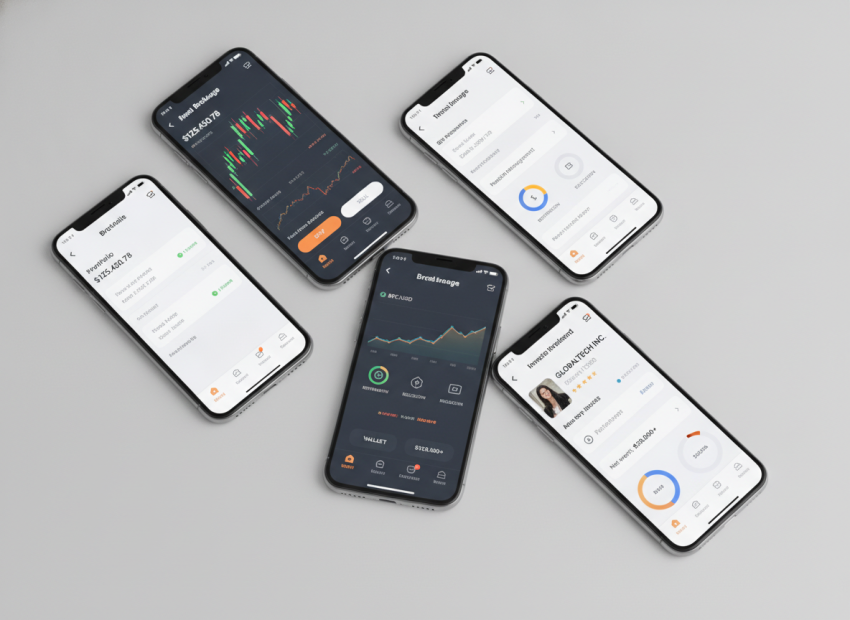
Starting your investment journey can feel daunting, with the vastness of financial markets often overwhelming new participants. This is precisely why selecting the right beginner-friendly broker is paramount. A well-chosen platform acts as your essential guide, simplifying complex processes and providing the necessary tools to build confidence from day one. The ideal broker for novices offers more than just a trading interface; it provides a supportive ecosystem designed for learning and growth. Key attributes include:
-
Intuitive Interface: Easy navigation and clear presentation prevent confusion.
-
Educational Resources: Comprehensive guides, articles, and webinars demystify investment concepts.
-
Low Entry Barriers: Features like fractional shares and zero-commission trades make investing accessible with smaller capital.
-
Risk-Free Practice: Paper trading accounts allow learning and strategy testing without financial risk.
These features are not merely conveniences; they are crucial for fostering a solid understanding of market dynamics and developing sound investment habits. Choosing wisely ensures a smoother, more confident entry into the world of investing, setting the stage for long-term financial growth.
The Top Contenders: Detailed Reviews of Leading Beginner Apps
Navigating the vast landscape of online brokerages requires identifying platforms that prioritize the novice experience without sacrificing long-term utility. While many investment apps claim to be beginner-friendly, only a select few successfully integrate commission-free trading with the robust market research and customer support necessary for sustainable growth.
In this section, we analyze the premier contenders currently dominating the market. These platforms have been selected based on their ability to lower entry barriers through fractional shares and intuitive mobile trading interfaces. Whether you are looking for a comprehensive investment platform for a retirement account or a streamlined app for building a first ETF portfolio, the following reviews highlight the specific strengths of the industry’s most trusted names.
Fidelity and Charles Schwab: Comparing the Giants of Beginner Investing
Fidelity and Charles Schwab are the industry titans that have defined the modern "zero-commission" era. For a beginner, choosing between them often comes down to specific preferences in cash management versus technical growth.
Fidelity: The Value Leader Fidelity is a standout for its Zero Expense Ratio index funds, which allow investors to own diversified portfolios with no management fees. It also offers a competitive edge by automatically sweeping uninvested cash into high-yield money market funds, ensuring your capital works for you even between trades. Its mobile interface is streamlined, making it ideal for those who want a clean, distraction-free experience.
Charles Schwab: The Educational Powerhouse Schwab’s primary draw for novices is its Stock Slices program and the legendary thinkorswim platform. While thinkorswim is advanced, its "PaperMoney" feature is the gold standard for risk-free practice. This allows beginners to simulate trades in real-time market conditions without risking actual capital.
Key Comparison:
-
Fidelity: Best for "set-and-forget" investors and those seeking high interest on uninvested cash.
-
Schwab: Best for those who want to eventually transition into active trading using professional-grade tools.
Both brokers offer 24/7 customer support, providing a critical safety net for first-time traders navigating their first market cycles.
E*TRADE and SoFi: Specialized Features for Education and Advisory
While the industry giants focus on scale, E*TRADE and SoFi carve out specific niches by prioritizing structured learning and human guidance. E*TRADE is frequently recognized as a premier destination for investor education. Its platform integrates Bloomberg TV and an extensive library of webinars that guide novices through complex market cycles. This "hand-holding" approach is particularly effective for beginners who want to understand the mechanics of the market rather than just executing trades.
SoFi Active Investing targets the mobile-first generation looking for a holistic financial ecosystem. Its most compelling feature for new investors is the complimentary access to certified financial planners (CFPs). While most traditional brokers charge premium fees for professional consultations, SoFi provides this as a standard benefit. This makes it an ideal choice for those who feel more confident having a professional validate their initial portfolio strategy.
-
E*TRADE: Best-in-class webinars and real-time market news integration.
-
SoFi: Free access to financial advisors and a simplified, intuitive interface.
-
Cost Structure: Both platforms maintain $0 commissions and $0 account minimums, ensuring accessibility for all capital levels.
Essential Features for New Investors
Having explored how platforms like E*TRADE and SoFi empower new investors with robust educational and advisory services, it’s clear that comprehensive support is paramount. Beyond learning resources, the true accessibility of an investment platform for beginners often hinges on a suite of fundamental features designed to simplify entry and mitigate initial risks. These core functionalities are crucial for anyone taking their first steps into the market, transforming complex financial concepts into manageable actions.
Understanding these essential tools is key to selecting a broker that not only educates but also facilitates practical, low-barrier investing, ensuring a confident start to your financial journey.
Lowering the Barrier: Fractional Shares and Zero-Commission Trades
The shift toward zero-commission trades has fundamentally altered the landscape for novice investors. Historically, high transaction fees acted as a significant deterrent, often consuming a substantial percentage of a small initial investment. Today, premier online brokerages like Fidelity and Charles Schwab have eliminated these costs for U.S. stocks and ETFs, allowing users to execute trades without the burden of per-trade overhead.
Complementing this is the rise of fractional shares, or "dollar-based investing." This feature is a game-changer for those with limited capital. Instead of needing hundreds or thousands of dollars to purchase a single share of a high-priced tech giant, beginners can invest as little as $1 or $5.
-
Accessibility: Start building a diversified portfolio with any amount.
-
Diversification: Spread small balances across multiple sectors and asset classes.
-
Psychological Ease: Reduces the "fear of entry" associated with high nominal stock prices.
By removing these financial hurdles, modern trading applications ensure that the size of your wallet no longer dictates the quality of your investment strategy.
Risk-Free Learning: The Power of Paper Trading and Educational Suites
While fractional shares and zero commissions lower the financial barrier, the psychological hurdle of potential loss remains. This is where paper trading and educational suites become indispensable for risk management.
The Virtual Sandbox: Paper Trading
Paper trading allows you to execute trades in a real-time market environment using virtual currency. It is the premier way to master a platform’s interface and test investment theories without risking capital.
-
Charles Schwab: Its thinkorswim platform offers "paperMoney," widely considered the gold standard for simulated trading.
-
Interactive Brokers: Provides a comprehensive paper trading account that mirrors its professional-grade tools, allowing for a seamless transition to live markets.
Comprehensive Educational Suites
The best broker apps function as financial academies. E*TRADE excels with its library of webinars and embedded Bloomberg TV, while Fidelity offers a "Learning Center" with curated paths for different experience levels. These resources ensure that when you eventually commit real capital, your decisions are rooted in market data rather than emotion.
Getting Started: From Account Setup to Your First Trade
Transitioning from a risk-free simulation to a live market environment is a pivotal milestone for any novice investor. While paper trading builds confidence, the move to a real-money account introduces the practicalities of capital management and security. To ensure a seamless entry, you must navigate the administrative requirements of modern brokerages while maintaining a disciplined approach to your initial asset selection.
Success in this phase depends on two critical pillars:
-
Operational Readiness: Completing the necessary verification and funding steps to secure your capital.
-
Strategic Allocation: Selecting foundational assets that mitigate early volatility while providing long-term growth potential.
Opening and Funding Your Account: Requirements and Security
Transitioning from simulated environments to live trading requires a few straightforward steps to establish your account. Opening an online brokerage account is typically a streamlined process, designed for ease of use even for beginners. You’ll generally need to provide personal identification details, including your Social Security number, date of birth, and a valid residential address. Additionally, brokers will ask for basic financial information and employment status to comply with regulatory requirements.
Once your account is approved, funding it is the next step. Most platforms offer several convenient methods: electronic transfers (ACH) from your bank account, wire transfers, or even mailing a check. Many beginner-friendly brokers have no minimum deposit requirements, allowing you to start investing with as little as $5 or $10. This flexibility is crucial for new investors building confidence.
Security is paramount in online investing. Reputable brokers are regulated by bodies like the Financial Industry Regulatory Authority (FINRA) and are members of the Securities Investor Protection Corporation (SIPC). SIPC insurance protects your investments up to $500,000 (including $250,000 in cash) against the failure of the brokerage firm, though it does not cover losses due to market fluctuations. Always ensure your chosen platform adheres to these robust security standards.
Building a Foundation: Utilizing Diversified ETFs and Mutual Funds
Once your account is funded, the focus shifts from logistics to strategy. For most beginners, the most effective way to build a resilient portfolio is through diversified funds rather than individual stock picking. This approach mitigates risk and simplifies the decision-making process for those still learning market dynamics.
-
Exchange-Traded Funds (ETFs): These are the cornerstone of modern mobile trading. ETFs track specific indices (like the S&P 500) or sectors, offering instant exposure to hundreds of companies in a single trade. They are highly liquid, trade throughout the day like stocks, and often come with near-zero expense ratios on platforms like Fidelity and Schwab.
-
Mutual Funds: Often preferred for long-term retirement accounts, mutual funds pool capital to purchase a diversified set of securities. Leading online brokerages now offer thousands of no-transaction-fee (NTF) mutual funds, removing the traditional cost barriers for entry-level investors.
By prioritizing these instruments, you leverage professional portfolio building without the high costs of a personal financial advisor. Use your app’s market research tools to screen for funds that align with your risk tolerance and long-term financial planning goals.
Advanced Growth: Scaling Your Investment Journey
Having established a solid foundation with diversified ETFs and mutual funds, new investors often reach a point where their growing expertise and portfolio size necessitate more advanced tools and strategies. The journey from beginner to seasoned investor involves scaling your approach, moving beyond the initial simplified platforms to explore options that offer deeper analytical capabilities and broader market access.
This phase is about empowering yourself with greater control and efficiency. It involves understanding when to transition to more robust trading platforms designed for active management, or conversely, leveraging professional services like robo-advisors or financial planners for optimized passive growth. The goal is to align your evolving investment goals with the right set of resources.
Transitioning to Power Tools: Exploring Thinkorswim and Interactive Brokers
As your proficiency grows, you may find that standard beginner apps lack the technical depth required for complex strategies. This is where "power tools" like thinkorswim and Interactive Brokers (IBKR) become essential for scaling your journey.
Thinkorswim (by Charles Schwab) Originally an elite standalone platform, thinkorswim is now the flagship for Schwab’s active traders. It is widely regarded as the gold standard for:
-
Advanced Charting: Access to hundreds of technical indicators and drawing tools.
-
Options Analysis: Sophisticated Greeks tracking and strategy backtesting capabilities.
-
Customization: The ability to build proprietary market scans and real-time alerts.
Interactive Brokers (IBKR) IBKR is the premier choice for those seeking institutional-grade execution. While their Global Trader app is novice-friendly, their flagship platforms offer:
-
Global Reach: Direct access to over 150 markets across 33 countries.
-
Low Margin Rates: Consistently offering some of the lowest rates in the industry for active traders.
-
No Feature Ceilings: Support for algorithmic trading and deep API integration.
| Feature | Thinkorswim | Interactive Brokers |
|---|---|---|
| Best For | Technical Analysis & Options | Global Access & Low Costs |
| Learning Curve | Steep but well-supported | Professional-grade/Very steep |
| Mobile App | Highly robust | Multiple specialized apps |
Passive vs. Active Management: Robo-Advisors and Financial Planning Services
While platforms like thinkorswim and Interactive Brokers cater to active traders seeking granular control, many investors prefer a more hands-off approach as their portfolios grow. This is where robo-advisors and financial planning services become invaluable. Robo-advisors offer automated, algorithm-driven portfolio management, typically at a lower cost than traditional human advisors. They build diversified portfolios based on your risk tolerance and financial goals, rebalancing them automatically. This passive management style is ideal for those who want professional guidance without the active involvement of picking individual securities.
For more personalized and comprehensive financial strategies, financial planning services provide tailored advice beyond just investments. These services can help with retirement planning, tax optimization, estate planning, and debt management, offering a holistic view of your financial health. Many brokerages, including some mentioned earlier like SoFi, integrate access to financial advisors, either through direct meetings or as part of premium services, allowing investors to scale their support as their needs evolve.
Conclusion: Launching Your Investment Future with Confidence
Choosing the right entry point into the financial markets is a pivotal decision for any novice investor. Whether you opt for the automated precision of a robo-advisor or the hands-on control of a self-directed brokerage account, the modern landscape offers unprecedented accessibility. The transition from theoretical learning to market execution requires a platform that balances simplicity with robust support.
To summarize the path forward, consider these final pillars for a successful launch:
-
Prioritize Education: Platforms like E*TRADE and Charles Schwab provide the necessary resources to turn market theory into actionable practice.
-
Minimize Friction: Look for zero-commission trades and fractional shares to ensure your capital works for you immediately, regardless of your initial account size.
-
Leverage Technology: Utilize mobile apps that offer intuitive interfaces and paper trading to build confidence without immediate financial risk.
-
Plan for Growth: Select a broker like Fidelity or Interactive Brokers that can scale with you as you transition from basic ETFs to more complex instruments.
The ideal investment app is ultimately the one that aligns with your specific financial goals and risk tolerance. By selecting a premier online brokerage today, you are not just opening an account; you are establishing the foundation for long-term wealth and financial independence.