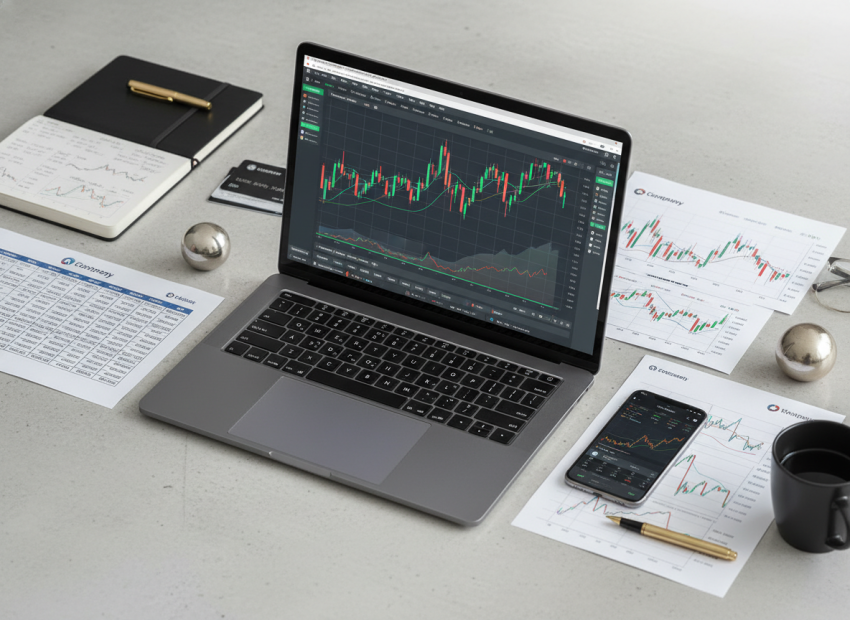
The Indian financial landscape has undergone a massive digital revolution, driven by a surge in retail participation and seamless demat account opening processes. Today, choosing from the best stock brokers in India is no longer just about executing trades; it is about finding a secure, SEBI registered broker that offers robust technology, low intraday trading charges, and reliable leverage options like a margin trading facility.
With the National Stock Exchange witnessing record-breaking numbers of active clients NSE, the market is highly competitive. Investors must navigate a diverse ecosystem of top share market brokers, which broadly split into two categories:
-
Discount Brokerage Firms: Offering flat-fee structures and cutting-edge trading platforms.
-
Full-Service Brokers: Providing comprehensive research, advisory, and personalized wealth management.
Selecting the right partner among the leading trading platforms India has to offer is the first critical step toward financial success.
Discount Brokers vs. Full-Service Brokers in India
As retail participation in the Indian stock market reaches historic highs, choosing the right intermediary is the first critical decision for any investor. The Indian brokerage landscape is broadly divided into two distinct categories: discount brokers and full-service brokers. Each model offers a fundamentally different approach to trading, technology, and cost structures.
While discount brokerages have disrupted the market with ultra-low flat fees and high-tech trading platforms, traditional full-service brokers continue to attract clients by offering comprehensive research, personalized advisory, and offline support. Understanding how these two models operate is essential to aligning your choice with your financial goals and trading frequency.
Understanding the Core Differences in Services and Costs
To choose the right partner among the best stock brokers in India, you must understand how discount and full-service brokers differ in their operational models and fee structures.
-
Discount Brokers: These platforms focus on providing a high-tech trading platform with a low-cost, flat-fee model. They typically charge a flat fee (e.g., ₹20 per trade) regardless of the transaction size. This makes discount brokerage highly attractive for active traders looking to minimize intraday trading charges. However, they operate on a self-service model, offering minimal research or advisory support.
-
Full-Service Brokers: These traditional players offer a comprehensive suite of services, including personalized investment advice, research reports, and a margin trading facility (MTF). Their fees are usually percentage-based (e.g., 0.10% to 0.50% of the trade volume), which can significantly increase transaction costs for high-volume traders.
| Feature | Discount Brokers (e.g., Zerodha, Groww) | Full-Service Brokers (e.g., ICICI Direct) |
|---|---|---|
| Brokerage Fees | Flat fee (typically ₹20/trade) | Percentage-based (0.1% – 0.5%) |
| Research & Advisory | No (Self-directed) | Yes (Dedicated relationship managers) |
| Demat Account Opening | Often free or nominal fee | Often bundled with banking services |
Which Broker Type Is Best Suited for Your Trading Style?
Choosing between a discount and a full-service broker largely depends on your individual trading style, experience, and financial goals.
-
Discount Brokers are ideal for experienced, self-directed traders who prioritize low transaction costs and are comfortable conducting their own research. They suit active day traders, swing traders, and investors who prefer managing their portfolios independently using advanced trading platforms and tools.
-
Full-Service Brokers are better suited for beginners, long-term investors, or those seeking comprehensive financial guidance. If you require personalized investment advice, in-depth research reports, wealth management services, or assistance with tax planning, a full-service broker offers the integrated support you need, despite higher brokerage charges.
Key Metrics to Evaluate the Best Trading Brokers
Having understood the fundamental differences between discount and full-service brokers and how they align with various trading styles, the next crucial step is to delve into the tangible metrics that truly differentiate them. Selecting the best trading broker in India goes beyond just service models; it requires a meticulous examination of their operational costs and account structures.
This section will guide you through the essential financial considerations, ensuring you can make an informed decision based on transparent fee structures. We will explore the various charges associated with opening and maintaining your trading accounts, alongside the critical brokerage fees for both intraday and delivery trades.
Demat and Trading Account Opening and Maintenance Charges
Building on the financial metrics introduced, a critical aspect of evaluating brokers involves understanding the costs associated with opening and maintaining your trading infrastructure. Demat and trading account opening charges can vary significantly. While many leading discount brokers in India, such as Zerodha and Upstox, often offer zero account opening fees to attract new clients, some full-service brokers might charge a nominal fee.Beyond the initial setup, Annual Maintenance Charges (AMC) for Demat accounts are a recurring expense. These charges can range from zero for certain brokers or specific plans to a few hundred rupees annually. It’s crucial for investors to scrutinize these fees, as they directly impact the overall cost of holding securities and can accumulate over time, especially for long-term investors. Comparing these charges is essential for selecting a cost-effective broker aligned with your investment horizon.
Intraday and Delivery Brokerage Fees Explained
Beyond the initial account setup, transactional costs significantly influence your trading profitability. Brokerage fees are primarily categorized into two types based on your holding period: Intraday and Delivery.
-
Intraday Brokerage: This applies when you buy and sell shares within the same trading day. Brokers typically charge a flat fee per executed order (common with discount brokers like Zerodha, Upstox) or a small percentage of the trade value (often capped). These charges are generally lower than delivery charges to encourage active trading.
-
Delivery Brokerage: This is incurred when you buy shares and hold them for more than one trading day. For many discount brokers, delivery trades are zero brokerage, making long-term investing highly cost-effective. Full-service brokers, however, usually charge a percentage of the total trade value for delivery, which can vary.
Understanding these fee structures is crucial as they directly impact your net returns, especially for frequent traders or those building a long-term portfolio.
Detailed Review of the Top 10 Trading Brokers in India
Having thoroughly examined the nuances of intraday and delivery brokerage fees, investors are now equipped with a foundational understanding of cost structures. This knowledge is paramount as we pivot to evaluating specific brokerage firms.
This section provides an in-depth review of the top 10 trading brokers in India, meticulously selected for their performance, platform capabilities, and client services. We will categorize them into leading discount brokers and established full-service providers, offering a clear comparative analysis to aid in your decision-making process.
The Leading Discount Brokers: Zerodha, Groww, Upstox, and Angel One
India’s discount brokerage revolution is led by four powerhouse SEBI registered brokers, each catering to distinct trader profiles:
-
Zerodha: As the pioneer of discount brokerage in India, it boasts a massive share of active clients on the NSE. It offers free equity delivery and a flat ₹20 fee for intraday trading charges on its flagship Kite trading platform.
-
Groww: Highly favored by beginners for its intuitive interface, making demat account opening and mutual fund investments incredibly seamless.
-
Upstox: Backed by marquee investors, it provides advanced charting tools and a robust margin trading facility (MTF) tailored for active day traders.
-
Angel One: Transitioned from a legacy player to a leading digital discount broker, combining low flat-fee pricing with premium research advisory.
These leading trading platforms in India have democratized investing by offering some of the lowest brokerage charges in the market.
Top-Tier Full-Service Brokers: ICICI Direct, HDFC Securities, and Kotak Securities
Transitioning from the cost-efficient models of discount brokers, full-service brokers offer a more comprehensive suite of services, often integrated with banking facilities. These brokers cater to investors seeking in-depth research, personalized advisory, and a broader range of financial products.
-
ICICI Direct: As a prominent full-service arm of the ICICI Group, ICICI Direct provides an extensive array of financial products, from equities and derivatives to mutual funds. It is highly regarded for its robust research reports, advisory services, and seamless integration with ICICI Bank accounts, offering a convenient ecosystem for investors.
-
HDFC Securities: A subsidiary of HDFC Bank, HDFC Securities stands out for its comprehensive financial services. It offers a wide spectrum of investment options, backed by strong research capabilities and a customer-centric approach, appealing to those who value integrated banking and brokerage services.
-
Kotak Securities: Part of Kotak Mahindra Bank, Kotak Securities delivers diversified financial offerings, including trading solutions and investment advisory. Its strength lies in providing a holistic financial experience, leveraging its banking parentage to offer convenience and a broad product portfolio.
Comparing Trading Platforms and Technology
While full-service brokers offer robust research and banking integrations, the ultimate battleground for modern Indian investors has shifted to digital infrastructure. A broker’s proprietary trading platform is the primary gateway to the markets, directly impacting execution speed, analytical depth, and overall user experience. Whether you are a long-term investor or an active day trader, the technology provided by your SEBI-registered broker can make or break your trading performance.
Today, Indian brokerages leverage cutting-edge technology to cater to two distinct user bases: casual investors seeking simplicity, and high-frequency traders demanding institutional-grade charting. Let’s examine how the industry’s leading platforms stack up across these diverse requirements.
Best Mobile Trading Apps for Beginners and Casual Investors
Building on the importance of robust trading technology, mobile applications have become indispensable for beginners and casual investors seeking convenience and ease of access to the Indian stock market. These apps prioritize intuitive interfaces, simplified navigation, and essential features for managing investments on the go. Key platforms excelling in this area include:
-
Zerodha Kite: Renowned for its clean UI, real-time data, and seamless order placement, making it highly accessible for new users.
-
Groww: Offers a straightforward experience for mutual funds and stocks, with a focus on simplicity and ease of investment.
-
Upstox: Provides a user-friendly interface with quick access to market data, portfolio tracking, and basic charting tools.
-
Angel One (formerly Angel Broking): Combines a user-friendly design with a broader range of features, suitable for those looking for a bit more functionality without overwhelming complexity.
These apps typically offer features like watchlist creation, basic market news, and easy fund transfers, catering perfectly to investors who prefer managing their portfolios from their smartphones.
Advanced Charting Tools and Platforms for Active Day Traders
For active day traders, a basic mobile interface is rarely sufficient. High-frequency trading demands robust desktop and web-based trading platforms that offer institutional-grade charting, rapid execution, and deep liquidity.
Leading SEBI-registered brokers cater to this segment with sophisticated tools:
-
Zerodha Kite Web: Integrates seamlessly with TradingView and ChartIQ, offering over 100 technical indicators, multi-chart layouts, and extensive historical data.
-
Upstox Pro Web: Designed for speed, featuring customizable workspaces, advanced bracket orders, and direct trading from charts.
-
Angel One SpeedPro: A dedicated desktop terminal providing real-time market feeds, instant order execution, and integrated access to their margin trading facility.
These platforms empower high-volume traders to analyze complex patterns and execute intraday strategies with minimal latency, making them the preferred choice for the most active clients on the NSE.
How to Open Your Demat and Trading Account Online
Once you have compared the top platforms and selected the ideal SEBI-registered broker for your trading style, the next step is to establish your market presence. In India, initiating your investment journey requires opening a unified Demat and trading account. Thanks to modern digital infrastructure, this onboarding process has transitioned from a tedious, paper-heavy chore into a seamless, fully online experience that takes only a few minutes.
Whether you choose a technology-first discount brokerage or a comprehensive full-service provider, the digital onboarding framework remains highly standardized. Understanding the prerequisites and the step-by-step activation flow ensures a hassle-free setup, allowing you to fund your account and start trading almost instantly.
Required Documents and KYC Compliance Checklist
To proceed with opening your Demat and trading account online, you’ll need to gather a few essential documents for KYC (Know Your Customer) compliance. This process is mandated by SEBI to ensure transparency and prevent illicit activities, safeguarding your investments and the market’s integrity. Here’s a checklist of commonly required documents:
-
Proof of Identity (PoI): PAN Card (mandatory), Aadhaar Card, Passport, Voter ID, Driving License.
-
Proof of Address (PoA): Aadhaar Card, Passport, Voter ID, Driving License, Utility Bills (electricity, gas, telephone – not older than 3 months), Bank Account Statement.
-
Proof of Income (PoI – for derivatives trading): Latest 6-month bank statement, latest ITR acknowledgment, latest salary slip, Form 16, Net worth certificate.
-
Bank Account Proof: Canceled cheque leaf with your name, bank statement, or passbook copy.
-
Photograph: A recent passport-sized photograph.
-
Signature: A clear signature on a blank paper for verification.
Ensure all documents are self-attested and clear. Digital copies will be required for online submission.
Step-by-Step Guide to Activating Your Account with a SEBI-Registered Broker
Once your KYC documents are ready, activating your account with a SEBI registered broker is a seamless, paperless process. Follow these steps to get started on one of the leading trading platforms India offers:
-
Registration: Visit your chosen broker’s website or download their mobile trading platform. Enter your mobile number and email to generate an OTP.
-
PAN & Bank Linkage: Input your PAN card details and link your bank account for seamless fund transfers.
-
Document Upload & IPV: Upload your KYC proofs. Complete the mandatory In-Person Verification (IPV) by recording a brief video via your webcam or phone.
-
e-Sign via Aadhaar: Digitally sign your application using the Aadhaar-linked OTP on the NSDL/CDSL portal.
Once submitted, the best demat account providers typically approve and activate your account within 24 hours, giving you instant access to the markets.
Conclusion: Choosing the Right Broker for Your Financial Goals
Selecting the best stock broker in India depends entirely on your trading frequency and financial objectives.
-
For Active Day Traders: Prioritize a SEBI registered broker offering low intraday trading charges, high-speed trading platforms, and robust margin trading facilities.
-
For Beginners & Long-term Investors: Look for the best demat account providers with zero delivery fees, intuitive mobile apps, and minimal account maintenance charges.
Ultimately, balancing cost (like discount brokerage models) with platform stability ensures your portfolio remains profitable. Align your choice with your specific trading style to maximize your market potential.