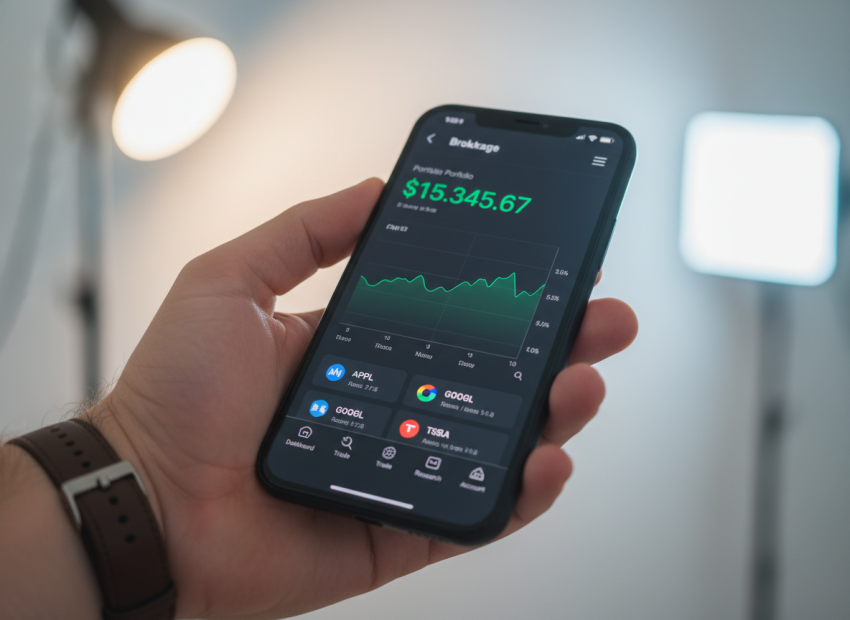
In today’s dynamic financial landscape, mobile trading has fundamentally reshaped how investors interact with global markets. The widespread availability of sophisticated brokerage apps and specialized forex trading platforms means that powerful investment tools are now at your fingertips, accessible directly from your smartphone. This comprehensive review aims to navigate the vast array of options, providing clarity for both novice and experienced traders.
We will meticulously evaluate the leading investing apps for stocks, ETFs, and options, alongside dedicated forex platforms. Our analysis will focus on critical factors such as fees, available features, overall usability, and regulatory compliance. Ultimately, our objective is to empower you to identify the ideal mobile trading solution that perfectly aligns with your individual trading style and financial aspirations.
Understanding the Shift to Mobile Trading: Key Features to Look For
The rapid evolution of technology has firmly established mobile trading as a cornerstone of modern financial markets. Investors, from novices to seasoned professionals, now expect robust functionality and seamless access to their portfolios directly from their smartphones. This shift to mobile-first investing, while offering unparalleled convenience, also necessitates a discerning approach when selecting a brokerage app.
To truly leverage the power of mobile trading, it’s crucial to understand the underlying features that differentiate platforms. The subsequent discussion will delve into these critical elements, guiding you through what to prioritize to ensure your chosen app aligns perfectly with your trading objectives and risk profile.
Evaluating Fees, Commissions, and Account Minimums
While the industry has pivoted to zero-commission stock and ETF trading, the cost of doing business isn’t always zero. For active traders, the primary friction points are now found in options contracts—typically $0.50 to $0.65 per contract—and margin interest rates.
When comparing platforms, prioritize these factors:
-
$0 Account Minimums: Leading brokers like Schwab and Fidelity allow you to start with any amount, lowering the barrier to entry.
-
Transparent Fee Schedules: Watch for "junk fees" such as inactivity charges, paper statement fees, or wire transfer costs.
-
Execution Quality: For high-volume traders, getting filled at the best price (NBBO) is often more valuable than saving a few cents on commissions.
Always verify ACAT transfer fees; while common (often around $75), many brokers will reimburse these costs to attract new accounts.
The Importance of Fractional Shares and Real-Time Market Data
Beyond low costs, two features define the modern mobile experience: fractional shares and real-time data. Fractional shares democratize investing, allowing you to buy high-priced stocks with as little as $1. This is essential for dollar-cost averaging and building a diversified portfolio on a budget.
However, accessibility must be paired with accuracy. Many "free" apps provide quotes delayed by 15 minutes. For active traders, real-time streaming data is non-negotiable to avoid slippage and ensure precise execution.
| Feature | Benefit for Beginners | Benefit for Active Traders |
|---|---|---|
| Fractional Shares | Diversification with small capital | Precise position sizing |
| Real-Time Data | Accurate portfolio tracking | Reduced execution slippage |
When comparing platforms, verify if fractional trading applies to all stocks or just specific ETFs, and check if "real-time" quotes require a manual refresh or stream automatically.
Top-Rated Multi-Asset Brokerage Apps
As the barriers to entry fall through fractional shares and instant data, the focus shifts to which platforms offer the most robust multi-asset ecosystems. For retail investors, the "best" app often depends on whether they prioritize long-term wealth building or high-frequency execution. The current market is dominated by a few elite players that successfully bridge the gap between desktop-grade power and mobile convenience.
These top-rated brokerage apps generally fall into two categories:
-
Full-service giants that emphasize research, education, and retirement planning.
-
Agile, tech-forward platforms optimized for technical analysis and rapid options trading.
Charles Schwab and Fidelity: Best Overall for Beginners and Long-Term Investors
For investors seeking a "forever" home, Charles Schwab and Fidelity remain the gold standard. Both offer $0 commissions on stocks and ETFs, but they excel in different areas of the mobile experience:
-
Charles Schwab: Renowned for its Schwab Stock Slices, it allows beginners to buy fractional shares of S&P 500 companies for as little as $5. Its mobile app is a powerhouse of research, providing Morningstar reports and real-time news that help novices transition into informed traders.
-
Fidelity: Often preferred for its seamless UI, Fidelity allows fractional trading in over 7,000 stocks and ETFs starting at just $1. Its "Trader+" mobile interface provides a bridge for those moving from passive investing to active strategies without switching apps.
Both platforms provide robust SIPC protection and extensive retirement (IRA) options, making them ideal for long-term wealth building and low-cost ETF trading.
Webull and E*TRADE: Ideal Options for Active Stock and Options Traders
For investors transitioning from passive holding to active market participation, Webull and E*TRADE offer the most robust mobile trading experience. Webull stands out as a tech-forward stock trading platform, providing advanced charting, dozens of technical indicators, and Level 2 data (Nasdaq TotalView) that appeal to day traders. Its sleek interface and zero-commission structure make it a leader among investing apps for the mobile-first generation.
E*TRADE, particularly its Power ETRADE* app, remains a gold standard for options trading. It offers:
-
Interactive risk/reward charts and spectral analysis.
-
Complex multi-leg order entry optimized for small screens.
-
Deep integration with Morgan Stanley’s institutional research.
While Webull excels in technical analysis and community-driven sentiment, E*TRADE provides a more comprehensive suite for those balancing active trading with professional-grade investment research tools.
A Deep Dive into Dedicated Forex Trading Platforms
While multi-asset platforms like Webull and E*TRADE excel for active stock and options traders, the dynamic world of foreign exchange demands a more specialized approach. Dedicated forex brokerage apps are purpose-built to navigate the unique intricacies of currency trading, offering specific tools and features tailored to this fast-paced market.
This section will delve into these specialized platforms, highlighting their distinct characteristics and what truly sets them apart from general investment apps, ensuring traders understand the specific considerations for forex.
How Forex Brokerage Apps Differ from Standard Stock Apps
While standard stock apps like Schwab or Fidelity focus on centralized exchanges and asset ownership, dedicated forex platforms operate in the decentralized, over-the-counter (OTC) market. The primary distinction lies in the cost structure and leverage. Stock apps have largely moved to zero-commission models for equities, whereas forex brokers primarily earn through the "spread"—the difference between the bid and ask price.
Furthermore, forex apps are built for 24/5 liquidity and high-velocity trading. Unlike the fractional shares found in stock apps, forex platforms utilize lots (micro, mini, and standard) and offer significantly higher leverage, often exceeding 30:1 or 50:1 for retail traders. This allows for greater market exposure with less capital, a feature rarely seen in traditional equity-focused brokerage apps.
Key Factors: Currency Pairs, Spreads, and Regulation
To maximize your edge, prioritize platforms offering a wide array of currency pairs, moving beyond the "majors" to include liquid "minors" and "exotics." The primary cost driver in FX is the spread—the gap between the bid and ask price. While some brokers offer fixed spreads for stability, active traders often prefer tight, variable spreads to reduce overhead.
Crucially, regulation serves as your primary defense against fraud. Always verify that a broker is licensed by a reputable tier-1 regulator:
-
NFA/CFTC for US-based traders.
-
FCA (UK) or ASIC (Australia) for international accounts.
Proper licensing ensures segregated client funds and transparent execution, distinguishing professional platforms from high-risk offshore entities.
Advanced Tools for Professional and High-Volume Traders
While retail-focused apps prioritize simplicity, professional traders require a more robust architecture to manage high-frequency strategies and complex portfolios. Moving beyond basic currency pairs and standard spreads, the elite tier of mobile platforms bridges the gap between desktop workstations and handheld devices.
For those managing significant capital, the mobile experience must offer more than just a clean interface; it requires institutional-grade execution and sophisticated risk management. These platforms cater to high-volume users who demand:
-
Direct market access (DMA)
-
Advanced algorithmic order types
-
Deep liquidity pools
Interactive Brokers (IBKR): Institutional-Grade Tools on Mobile
Interactive Brokers (IBKR) stands as the definitive choice for traders who require institutional-grade capabilities on the move. Unlike simplified retail apps, IBKR’s mobile suite—comprising IBKR Mobile and the more streamlined GlobalTrader—provides direct access to over 150 global markets across 34 countries.
Professional traders benefit from several key advantages:
-
Advanced Order Types: Access to over 100 order types and algorithms to optimize execution and minimize slippage.
-
Industry-Leading Margin Rates: IBKR consistently offers the lowest margin rates in the industry, often significantly lower than E*TRADE or Schwab.
-
Multi-Asset Integration: Seamlessly trade stocks, options, futures, currencies, and bonds from a single, unified interface.
While the interface has a steeper learning curve, the depth of real-time data and technical indicators is unmatched for high-volume participants seeking a professional edge.
Analyzing Margin Rates, Complex Order Types, and Execution Speed
For high-volume traders, the technical nuances of a platform can dictate profitability. Margin rates are a primary differentiator; while many retail brokers charge upwards of 12%, institutional-grade platforms like Interactive Brokers offer tiered rates significantly closer to the benchmark.
Beyond cost, professional mobile apps must support sophisticated complex order types to manage risk effectively:
-
Bracket Orders: Simultaneously set profit targets and stop-losses.
-
Trailing Stops: Protect gains by adjusting the exit price as the market moves.
-
Conditional Logic: Use ‘One-Cancels-the-Other’ (OCO) or ‘If-Then’ triggers.
Finally, execution speed and price improvement are critical. Top-tier apps prioritize routing technology that meets or exceeds the NBBO (National Best Bid and Offer), ensuring minimal slippage during volatile sessions.
Choosing the Best Apps for Beginners and Educational Value
While the previous section delved into the sophisticated tools and high-volume capabilities favored by professional traders, it’s crucial to recognize that not all investors begin at this advanced level. For those new to the financial markets, the journey starts with foundational knowledge and user-friendly platforms designed to ease them into the complexities of trading. This section focuses on identifying brokerage apps that prioritize accessibility, educational value, and safe entry points for novice investors.
Understanding that a steep learning curve can be a significant barrier, we will explore platforms that offer intuitive interfaces and robust learning resources. The goal is to empower beginners to build confidence and develop essential trading skills without being overwhelmed by overly complex features.
How Micro-Investing and Demo Accounts Help Novices Start Safely
For many novices, the primary barriers to entry are capital constraints and the fear of loss. Micro-investing, powered by fractional shares, allows users to purchase high-priced equities with as little as $1 to $5. This feature, a staple of Charles Schwab and Fidelity, enables immediate diversification for those on a budget, allowing them to own a piece of major indices without a massive initial outlay.
Complementing this is paper trading (demo accounts). Platforms like Webull provide simulated environments using real-time data, allowing beginners to:
-
Master complex order types and app navigation.
-
Test strategies without risking actual capital.
-
Build psychological discipline before committing real funds.
These tools collectively lower the "cost of learning," ensuring a safer transition into active market participation.
Top Platforms for In-App Market Education and Interactive Research
Beyond low-risk entry points, top-tier apps integrate structured learning directly into the trading workflow. Charles Schwab leads the industry with its Schwab Live broadcasts and extensive video library, providing real-time market commentary. Fidelity excels by embedding "snackable" educational content within its main interface and the Fidelity Bloom app, which focuses on building healthy financial habits.
For deeper investigation, E*TRADE offers institutional-grade research from Morgan Stanley, translating complex data into actionable insights. Key educational features to prioritize include:
-
Structured Curricula: Step-by-step modules covering everything from basic ETFs to margin trading.
-
Interactive Research: Real-time analyst ratings and sentiment indicators.
-
Live Webinars: Direct access to market strategists for Q&A sessions.
Security, Regulation, and Final Verdict
While intuitive interfaces and educational resources empower your trading journey, they mean little without a robust foundation of safety. As you transition from learning the ropes to committing significant capital, the regulatory framework protecting your assets becomes the most critical factor in your decision-making process.
In this concluding section, we examine the essential safeguards—from SIPC and FDIC insurance to the rigorous oversight of global forex regulators—that ensure your chosen platform is as secure as it is functional. Finally, we will synthesize our findings into a definitive comparison to help you select the app that aligns perfectly with your unique financial goals.
SIPC, FDIC, and Forex Regulatory Protections to Watch
Before committing capital, you must verify three critical pillars of protection to ensure your funds are shielded from institutional insolvency:
-
SIPC Coverage: Most US-based stock brokers are members of the Securities Investor Protection Corporation, which protects up to $500,000 (including a $250,000 cash limit) if the firm fails. Note: SIPC does not cover market losses.
-
FDIC Insurance: This applies to uninvested cash moved into "sweep" accounts at partner banks, typically covering up to $250,000.
-
Forex Regulation: Crucially, forex accounts are not covered by SIPC. Instead, look for oversight from the NFA/CFTC (US), FCA (UK), or ASIC (Australia) to ensure segregated client funds and ethical execution.
Summary Comparison: Which App Fits Your Unique Trading Style?
Selecting the ideal platform requires aligning your specific strategy with the broker’s core strengths. While security and regulation provide the foundation, the mobile experience dictates your daily efficiency. Use the following breakdown to match your profile with the right provider:
| Trading Style | Recommended App | Key Advantage |
|---|---|---|
| Beginner / Long-Term | Charles Schwab | Superior education & fractional shares |
| Active / Options | Webull | Advanced charting & zero-fee options |
| Professional / Global | Interactive Brokers | Lowest margin rates & 150+ markets |
| Forex Specialist | IG / OANDA | Deep liquidity & specialized FX tools |
-
Passive Investors: Prioritize Fidelity for its robust retirement planning and fee-free funds.
-
Technical Traders: Choose E*TRADE for its "Power" mobile interface and real-time data streams.
Conclusion
Selecting the ideal brokerage app in 2026 requires aligning platform capabilities with your financial objectives:
-
Beginners: Prioritize education and fractional shares (Schwab/Fidelity).
-
Active Traders: Focus on low latency and advanced charting (Webull).
-
Forex Specialists: Emphasize spreads and regulatory oversight.
Ultimately, the best app balances security, cost-efficiency, and usability for your unique strategy.