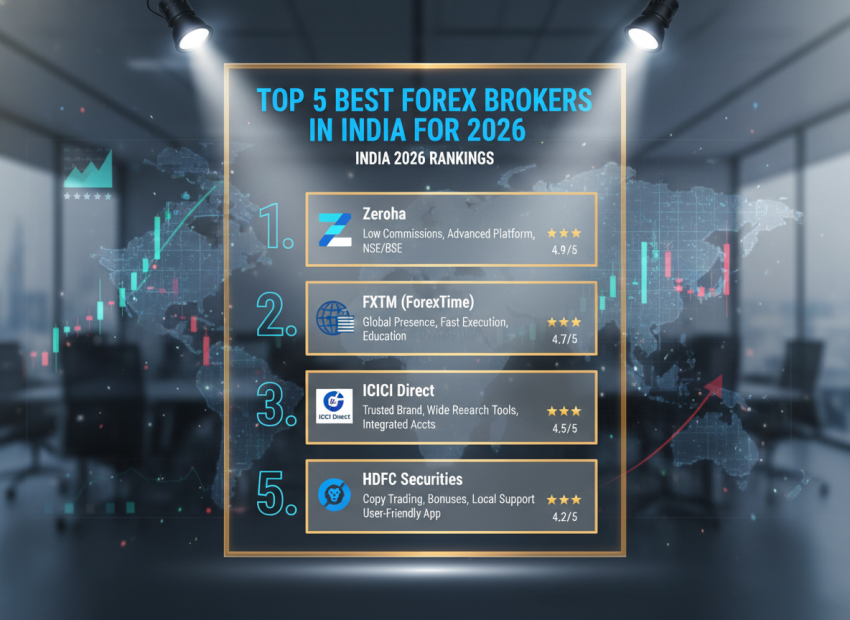
The forex trading landscape in India is a unique ecosystem defined by high retail demand and stringent regulatory oversight. Managed primarily by the Securities and Exchange Board of India (SEBI) and the Reserve Bank of India (RBI), the market is structured to prioritize financial stability and capital control. Unlike the decentralized global spot market, retail forex in India is largely centered on exchange-traded currency derivatives.
Key characteristics of the current market include:
-
Restricted Currency Pairs: Legal trading is traditionally limited to pairs involving the Indian Rupee (INR), such as USD/INR and EUR/INR.
-
Dual Brokerage Models: Traders often choose between local SEBI-regulated entities for exchange-traded futures and international brokers for broader liquidity and asset variety.
-
Digital Transformation: A surge in mobile trading apps has democratized access, making India one of the fastest-growing FX hubs in Asia.
Regulatory Framework and Legality in India
Navigating the Indian forex market requires more than just technical analysis; it demands a thorough understanding of the strict legal boundaries established by national authorities. Unlike many global markets where spot trading is the norm, India maintains a unique, exchange-centric model designed to protect the national economy and retail investors alike.
Understanding these jurisdictional nuances is critical for any trader looking to avoid legal pitfalls. Before committing capital, it is essential to grasp how local oversight shapes your trading options, from the specific currency pairs available to the legitimacy of using offshore platforms.
The Role of SEBI and RBI in Forex Oversight
The regulatory landscape in India is defined by the collaborative oversight of the Reserve Bank of India (RBI) and the Securities and Exchange Board of India (SEBI).
-
RBI’s Role: As the central bank, the RBI enforces the Foreign Exchange Management Act (FEMA), primarily focusing on capital flow and the stability of the Indian Rupee (INR). It dictates which currency pairs are permissible for trade to prevent unauthorized capital flight.
-
SEBI’s Role: SEBI acts as the market watchdog, regulating the exchanges (NSE, BSE, MCX) where currency derivatives are traded. Its mandate is to ensure transparency, prevent fraud, and protect retail investors.
This dual-layered approach means that while international spot forex trading is popular, the authorities strictly mandate that domestic transactions remain exchange-traded and typically involve the INR.
Trading INR Pairs vs. International Currency Pairs
In India, the distinction between INR pairs and international currency pairs is defined by the venue and instrument. Legal trading for residents is primarily restricted to exchange-traded currency derivatives on domestic platforms like the NSE or BSE.
-
INR Pairs: Traders can legally trade USD/INR, EUR/INR, GBP/INR, and JPY/INR. These are cash-settled and SEBI-regulated.
-
International Pairs: While SEBI permits specific cross-currency pairs (e.g., EUR/USD, GBP/USD) on local exchanges, trading "spot forex" via offshore brokers often bypasses local oversight.
International brokers offer superior liquidity and diverse majors (e.g., AUD/USD), but traders must navigate FEMA restrictions regarding outward remittances for speculative purposes.
Legal Considerations for Using International Brokers
Navigating international brokers requires a nuanced understanding of the Foreign Exchange Management Act (FEMA). While offshore platforms provide access to global liquidity, the RBI prohibits using the Liberalised Remittance Scheme (LRS) for speculative forex trading. This places offshore trading in a legal ‘grey zone’ for residents.
Key considerations include:
-
Regulatory Protection: Offshore entities fall outside SEBI’s jurisdiction, removing local legal recourse.
-
Transaction Monitoring: Indian banks often restrict direct transfers to forex brokers; hence, many traders rely on digital wallets.
-
Global Credibility: Prioritize brokers regulated by FCA or ASIC to ensure fund security.
Key Criteria for Evaluating Top Indian Forex Brokers
Selecting a top-tier broker in India demands a strategic approach that balances strict compliance with high-performance trading tools. Since the local landscape is governed by specific SEBI mandates and FEMA regulations, safety must be the primary filter. However, a broker’s true value also lies in its technological ecosystem and cost-efficiency. In this section, we break down the essential benchmarks used to vet our top picks—ranging from fund safety protocols and platform versatility to the nuances of spreads and commissions—providing a clear roadmap for your selection process.
Regulatory Licenses and Fund Safety Protocols
Building on the critical aspects of security and cost-effectiveness, the bedrock of any reliable forex broker lies in its regulatory compliance and robust fund safety protocols. For Indian traders, this means scrutinizing licenses from both domestic authorities like SEBI and RBI for INR-denominated derivatives, and reputable international bodies such as the FCA (UK), CySEC (Cyprus), or ASIC (Australia) for broader currency pairs. These licenses are not mere formalities; they enforce strict financial conduct, mandatory client fund segregation in separate bank accounts, and often include investor compensation schemes. Such measures are vital, safeguarding your capital against potential broker insolvency or misconduct, and ensuring a secure trading environment.
Trading Platforms: From MetaTrader to Proprietary Apps
The efficiency of your trading strategy is often dictated by the technology powering your execution. In the Indian market, platforms generally fall into two distinct categories:
-
MetaTrader 4 & 5 (MT4/MT5): These remain the industry standard due to their extensive library of technical indicators and automated trading capabilities (EAs). MT5 is particularly useful for those looking to bridge the gap between spot forex and exchange-traded currency futures.
-
Proprietary Platforms: Developed by leading brokers like IG or Exness, these custom-built apps often provide a more intuitive user experience, integrated market sentiment data, and advanced risk management tools that standard platforms lack.
When evaluating these tools, prioritize low latency and mobile stability. For Indian traders navigating the volatility of INR pairs, a seamless transition between desktop and mobile interfaces is non-negotiable for effective position management.
Fee Structures: Spreads, Commissions, and Swaps
The total cost of ownership in forex trading extends beyond the initial deposit. Indian traders must evaluate spreads—the bid-ask difference—which can be fixed or variable. While ‘Zero Spread’ accounts exist, they often carry a fixed commission per lot.
Equally important are swaps, or rollover interest, charged on positions held overnight. For those following Sharia principles or long-term trend-following strategies, swap-free accounts are a critical feature. Evaluating these fee structures is paramount, as even minor pip differences can significantly impact the net profitability of high-leverage trades in the Indian market.
Detailed Reviews of the Top 5 Best Forex Brokers
Having analyzed the intricate fee structures and regulatory landscapes, we now turn our attention to the specific platforms that lead the Indian market. Selecting the right broker requires balancing cost-efficiency with the specific tools needed for your trading style. Whether you prioritize institutional-grade execution or accessible entry points, the following five brokers represent the gold standard for 2026.
These selections have been vetted for their security protocols, platform stability, and localized support. We have categorized them to help you identify which provider aligns best with your professional requirements or capital constraints.
IG and Interactive Brokers: Top Picks for Professional Traders
Beyond fee structures, professional traders prioritize advanced platforms and comprehensive market access. IG emerges as a leading choice for Indian professionals, offering a sophisticated platform for both forex and CFDs. While not directly SEBI-regulated, its strong international regulatory framework provides a secure environment for Indian clients. Interactive Brokers, though restricted from offering spot forex and CFDs in India, is an unparalleled option for professionals focused on exchange-traded currency derivatives, stocks, and other global assets, leveraging its robust local regulation and advanced analytical tools.
Exness and XM: Best for High Leverage and Low Deposits
While IG and Interactive Brokers cater to institutional-grade professionals, Exness and XM are the preferred choices for retail traders in India seeking capital efficiency and low entry barriers. These brokers are particularly popular among those who wish to start with smaller capital outlays while maintaining access to significant market exposure.
-
Exness: Renowned for its unlimited leverage (on specific account types) and a low minimum deposit of just $10. It is highly favored for its instant withdrawal processing and stable spreads during high-volatility news events.
-
XM: Offers a robust 1:1000 leverage and a minimum deposit of only $5. XM is distinguished by its "no re-quotes" execution policy and extensive local educational support.
| Feature | Exness | XM |
|---|---|---|
| Min Deposit | $10 | $5 |
| Max Leverage | 1:Unlimited | 1:1000 |
| Platforms | MT4, MT5, Proprietary App | MT4, MT5 |
| Execution | Market | Market (No Re-quotes) |
Forex.com: The Best All-Rounder for Education and Research
While Exness and XM cater to those seeking high leverage, Forex.com is the premier choice for Indian traders prioritizing market intelligence and skill development. Its award-winning Trading Academy provides structured courses that are invaluable for beginners navigating the complexities of currency markets.
Beyond education, Forex.com offers:
-
Advanced Research: Real-time actionable trade ideas and professional-grade charting tools.
-
Diverse Platforms: Seamless integration with MetaTrader and their high-performance proprietary mobile app.
-
Reliability: A long-standing reputation for transparency and robust global regulatory backing.
It remains the most balanced "all-rounder" for those who view trading as a long-term educational journey.
Comparing Trading Platforms and User Experience
Beyond educational resources and research tools, the practical trading experience is profoundly shaped by the quality and functionality of a broker’s platform. A superior platform ensures seamless navigation, robust tools, and reliable performance, all critical for effective trading decisions.
This section delves into the core aspects of trading platforms and overall user experience offered by the top brokers. We will examine their mobile trading capabilities, the sophistication of charting tools, and the crucial metrics of order execution speed and slippage management.
Mobile Trading: Best Apps for Trading on the Go in India
For Indian traders prioritizing flexibility, mobile trading apps are indispensable. Building on the importance of platform quality, several top brokers offer robust applications designed for trading on the go. These apps typically feature advanced charting, a rich variety of sophisticated trading tools, and intuitive interfaces. Among the best are:
-
IG: Known for its comprehensive IG Trading mobile app, complemented by the IG Academy for learning.
-
Interactive Brokers: Offers the powerful IBKR mobile app and the Impact app for diverse trading needs.
-
FOREX.com: Provides a dedicated FOREX.com mobile app, ensuring a seamless trading experience.
-
AvaTrade: Features the AvaTradeGo mobile app and AvaOptions for specialized options trading.
-
IC Markets: Supports the widely used MT4, MT5, and cTrader mobile apps, catering to various preferences.
Charting Tools and Technical Indicators for Local Markets
Beyond mobile accessibility, the depth of charting tools defines the professional trading experience. For Indian traders analyzing INR-based pairs or NSE currency futures, platforms like Interactive Brokers and IG provide institutional-grade technical indicators.
-
Advanced Indicators: Access to 100+ tools, including Ichimoku Clouds and Pivot Points, is crucial for navigating USD/INR volatility.
-
Market Context: Integration of real-time volume data from local exchanges helps identify key liquidity zones.
-
Customization: Support for Pine Script or MQL5 enables the creation of bespoke indicators tailored to the unique price action of the Indian market.
Order Execution Speeds and Slippage Management
In the fast-paced Indian forex market, order execution speed is a critical differentiator for profitability. Top-tier brokers like Exness and XM leverage ultra-low latency servers to ensure trades are executed in milliseconds, significantly minimizing the risk of price rejection.
Slippage management is equally vital, especially during high-volatility events affecting INR pairs. Professional-grade platforms like Interactive Brokers and IG offer advanced order types—such as guaranteed stop-losses—to protect capital against price gaps.
| Broker | Execution Type | Typical Speed |
|---|---|---|
| Exness | Market/Instant | < 25ms |
| XM | No Requotes | < 30ms |
| IG | DMA/STP | < 50ms |
Traders should prioritize brokers with robust infrastructure to ensure consistent performance during peak market hours.
Practical Guide to Starting Your Forex Journey in India
Having thoroughly evaluated the technical performance, execution speeds, and slippage management of top forex brokers, you’re now equipped with crucial insights. This section shifts focus to the practicalities of initiating your forex trading journey in India. We will guide you through the essential steps, from setting up your trading account and understanding verification processes to efficiently funding your account and implementing robust risk management strategies tailored for the Indian market.
Step-by-Step Account Opening and Verification Process
To begin your trading journey with a reputable broker, follow this standardized onboarding process:
-
Registration: Sign up on the broker’s platform using your legal name and contact information.
-
Account Configuration: Select your preferred trading platform (MT4/MT5) and account type based on your risk appetite and capital.
-
KYC Verification: Submit digital copies of your PAN card (mandatory in India) and Aadhar card. You must also provide a recent utility bill or bank statement as proof of address.
-
Final Approval: Once the broker’s compliance team validates your documents, your account will be activated.
Funding Your Account: Best Deposit and Withdrawal Methods
Efficient capital management is vital for Indian traders. While international brokers offer diverse options, local regulations often favor specific channels:
-
UPI & Net Banking: The most popular and fastest methods for local transfers.
-
E-Wallets: Services like Skrill and Neteller provide quick processing but may incur higher fees.
-
Bank Wire: Best for large sums, though subject to stricter RBI scrutiny.
-
Credit/Debit Cards: Widely accepted for instant deposits.
Pro Tip: Always ensure the account name matches your bank details to avoid AML (Anti-Money Laundering) delays.
Risk Management Strategies for Indian Market Volatility
Navigating the inherent volatility of INR pairs requires a disciplined approach to capital preservation. Once your account is funded, implement these core strategies to safeguard your investment:
-
Use Stop-Loss Orders: Essential for protecting against sudden market gaps during RBI policy announcements.
-
Manage Leverage: While international brokers offer high ratios, limit your effective leverage to avoid rapid account liquidation.
-
Position Sizing: Never risk more than 1-2% of your total equity on a single trade.
-
Monitor Economic Calendars: Stay informed on local inflation data and global USD trends that directly impact Rupee liquidity.
Final Verdict: Which Forex Broker Should You Choose?
Selecting the right broker depends on your trading goals. For institutional-grade tools and multi-asset access, Interactive Brokers and IG are the gold standard. Retail traders seeking high leverage and low entry barriers will find Exness and XM most accommodating. Forex.com remains the top choice for beginners needing robust education. Ultimately, ensure your selection aligns with your risk tolerance and regulatory preferences to navigate the Indian forex landscape effectively.