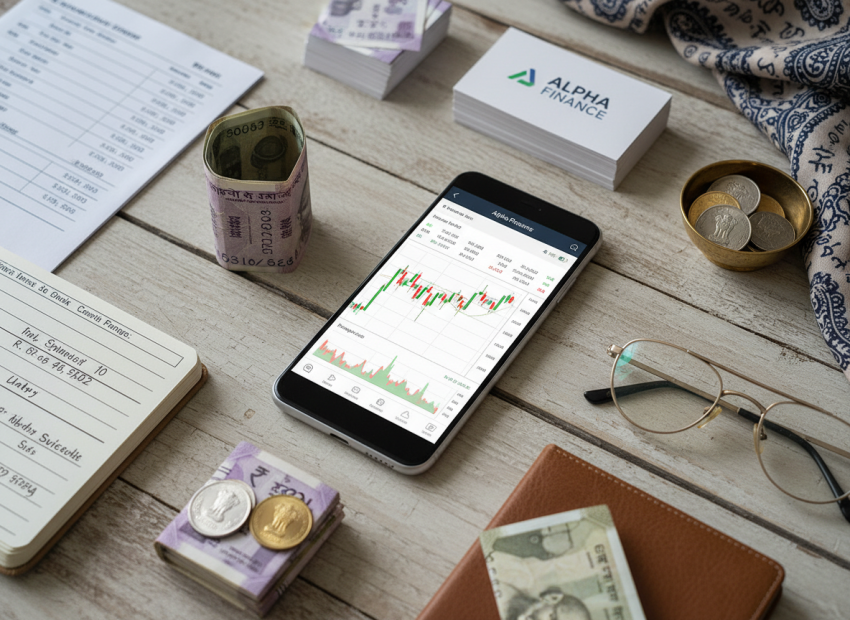
The Indian financial landscape has undergone a significant digital transformation, shifting from traditional floor-based trading to sophisticated, mobile-first trading platforms. For retail investors and seasoned professionals alike, selecting the right stock market app is a strategic decision that directly influences execution speed, cost-efficiency, and overall portfolio security. The proliferation of discount brokers in India has democratized access to the markets, offering competitive brokerage charges and streamlined demat account opening processes.
However, with numerous SEBI registered brokers—ranging from tech-heavy platforms like Zerodha and Upstox to research-oriented firms like Sharekhan—the choice can be daunting. Whether your focus is on high-frequency intraday trading, long-term equity, or mutual funds, understanding the technical and regulatory nuances of your trading account provider is paramount. This review provides an analytical comparison of the leading apps to help you identify the ideal partner for your investment journey.
Navigating the Indian Trading App Landscape
Building on the growing prominence of mobile trading, understanding the intricacies of India’s digital brokerage ecosystem is paramount for any investor. The sheer volume of available platforms necessitates a clear grasp of what these broker apps offer and how they function as essential tools for market participation.
This section will delve into the foundational aspects of trading applications, exploring their core utility and the critical role they play in modern investment strategies. Furthermore, we will examine the robust regulatory framework established by SEBI, ensuring investor protection and fostering a secure trading environment within India.
What are Broker Apps and Why are They Essential?
Broker apps are mobile-first software solutions provided by SEBI registered brokers that allow investors to execute trades directly on the NSE and BSE. These platforms serve as the primary digital interface for managing your trading account and viewing holdings in your demat account in real-time.
In the modern Indian financial ecosystem, a stock market app is essential for several reasons:
-
Instant Execution: Vital for intraday trading, where price volatility requires split-second decision-making and low latency.
-
Cost Efficiency: The rise of discount brokers in India has significantly lowered brokerage charges, making the market accessible to retail investors through transparent, flat-fee models.
-
Comprehensive Access: These apps consolidate equity, F&O, commodities, and mutual funds into a single, unified dashboard.
-
Real-time Analytics: They provide live market feeds, advanced charting tools, and instant order status updates, ensuring traders remain informed regardless of their location.
Regulatory Framework: SEBI Compliance and Investor Protection
While broker apps offer unparalleled convenience, their reliability hinges on robust regulatory oversight. In India, the Securities and Exchange Board of India (SEBI) is the apex body ensuring market integrity and investor protection. SEBI compliance is paramount for any trading platform, guaranteeing that brokers adhere to stringent guidelines regarding:
-
Fund Segregation: Ensuring client funds are kept separate from the broker’s operational funds.
-
Fair Trading Practices: Preventing market manipulation and ensuring transparent execution.
-
Transparent Fee Structures: Clearly disclosing all charges to investors. This regulatory framework safeguards investors’ interests by mandating regular audits, robust grievance redressal mechanisms, and strict data security protocols. Choosing a SEBI-registered broker app ensures your investments are protected against fraud and malpractice, fostering trust and confidence in the digital trading ecosystem. Always verify a broker’s SEBI registration before committing your funds.
Critical Parameters for Evaluating Trading Apps
Having established a solid understanding of the regulatory framework and investor protection in the Indian trading landscape, the focus now shifts to the tangible aspects that directly influence a trader’s experience and profitability. Selecting an ideal broker app goes beyond mere compliance; it necessitates a meticulous examination of its operational mechanics and financial implications.
This section will outline the critical parameters essential for a comprehensive evaluation of trading apps. By dissecting these key criteria, investors can make informed decisions, ensuring their chosen platform aligns perfectly with their trading strategies and financial objectives.
Brokerage, Account Fees, and Charges
The cost of trading is a primary determinant of long-term profitability for any retail investor. In the Indian market, the shift toward discount brokers has revolutionized fee structures, typically offering zero brokerage on equity delivery and a flat fee (often ₹20) for intraday and F&O trades. In contrast, full-service brokers may charge a percentage-based commission in exchange for research and advisory services.
Beyond the per-trade cost, investors must evaluate:
-
Account Opening Charges (AOC): Many platforms like Groww and Dhan offer zero-cost entry, while others like Zerodha charge a nominal one-time fee to maintain high-quality infrastructure.
-
Annual Maintenance Charges (AMC): This recurring fee varies; some brokers waive it for the first year or offer lifetime free accounts, while others charge between ₹200 and ₹500 annually.
-
Statutory Levies: Regardless of the broker, traders must account for SEBI charges, Securities Transaction Tax (STT), and GST, which are mandatory across all platforms.
For active traders, even minor differences in brokerage can significantly erode margins, making a transparent, low-cost structure essential for a sustainable demat account strategy.
Features, Tools, and User Experience (UI/UX)
While low brokerage is vital, the platform’s User Experience (UX) and technical toolkit determine your execution speed and accuracy. A superior stock market app must balance a clean interface with high-performance features to cater to both passive investors and active intraday traders.
Key elements to evaluate include:
-
Charting & Analysis: Look for integration with TradingView or ChartIQ libraries, offering 100+ indicators and multiple timeframes for technical analysis.
-
Advanced Order Types: Essential for risk management, ensure the app supports GTT (Good Till Triggered), Cover Orders, and Bracket Orders.
-
Speed and Stability: High-frequency traders require low-latency data feeds to avoid slippage during volatile market sessions.
-
Analytical Tools: Features like stock screeners, heatmaps, and real-time P&L tracking provide a competitive edge.
For beginners, a simplified UI like Groww reduces the learning curve, whereas seasoned traders often prefer the robust, data-heavy environments of Zerodha Kite or Dhan.
Top Broker Apps in India: Detailed Review and Comparison
Having established the benchmarks for fees and technology, we now examine the market leaders dominating the Indian landscape. The transition from traditional brokerage to tech-first platforms has created a fierce environment where discount brokers and hybrid models compete for millions of retail investors.
This section provides a granular breakdown of the top-tier applications. Whether you require the lowest brokerage charges for high-frequency trading or a simplified interface for long-term SIPs, these platforms represent the gold standard of Indian fintech. We evaluate their unique value propositions—from advanced technical tools to beginner-friendly ecosystems—to help you determine which platform best aligns with your financial goals.
Spotlight on Leading Platforms (Zerodha, Groww, Angel One, Upstox, Dhan, Sharekhan)
India’s brokerage landscape is dominated by a few key players, each catering to specific trader profiles. Zerodha Kite remains the industry gold standard, offering a minimalist interface and robust stability for high-volume traders. In contrast, Groww has captured the millennial market with its ultra-simplified UI, making it the preferred choice for beginners and mutual fund investors. For those seeking advanced technical tools, Upstox and Dhan provide superior charting capabilities, with Dhan offering unique ‘Trade from Charts’ features via TradingView integration. Angel One functions as a versatile ‘Super App,’ blending discount brokerage rates with full-service features like research advisory. Finally, Sharekhan serves investors who prioritize expert research and offline branch access. All these platforms are SEBI registered, ensuring a secure environment for managing your demat account and executing intraday trading strategies.
Comparative Analysis: Performance, Offerings, and Support
When evaluating the best broker apps in India, performance and reliability are non-negotiable. Zerodha Kite and Upstox lead in execution speed and stability, though Dhan has rapidly gained favor among intraday trading enthusiasts for its lightning-fast interface and specialized features.
| Feature | Zerodha | Groww | Angel One | Sharekhan |
|---|---|---|---|---|
| Primary Audience | Active Traders | Beginners | Algo Traders | Long-term Investors |
| Asset Classes | Stocks, F&O, MF | Stocks, MF, Gold | All + US Stocks | Full-service Suite |
| Support Type | Digital/Ticket | App-based Chat | Hybrid/Digital | Offline Branches |
While discount brokers in India like Groww prioritize a simplified UI for opening a demat account, full-service players like Sharekhan offer personalized advisory. For SEBI registered brokers, security is standardized via 2FA and encryption, but support responsiveness varies; Angel One provides a robust hybrid model, whereas Upstox focuses on AI-driven automated assistance for high-volume traders.
Choosing Your Ideal Trading App Based on Needs
Selecting the right trading platform is rarely a one-size-fits-all decision. While technical specifications and fee structures provide a baseline for comparison, your final choice must hinge on your personal trading style and financial objectives. A platform that excels for a long-term mutual fund investor may lack the high-frequency tools and low-latency execution required by a professional intraday trader.
To find your ideal match, you must evaluate how a broker’s ecosystem aligns with your current expertise and specific market interests. Whether you are placing your first trade or managing a complex derivatives portfolio, the right choice involves balancing ease of use with analytical depth. The following segments categorize platforms based on their specialized strengths to help you pinpoint the most effective tool for your investment journey.
Best Apps for Beginners vs. Experienced Traders
Selecting the right stock market app depends heavily on your market proficiency. For those opening their first demat account, simplicity and educational support are paramount.
For Beginners: Platforms like Groww and Sharekhan excel in this category. Groww offers a clutter-free interface ideal for long-term investors, while Sharekhan provides valuable research insights and offline assistance, helping novices navigate SEBI registered brokers with confidence. These apps prioritize a smooth learning curve over complex data sets.
For Experienced Traders: Active participants requiring advanced intraday trading tools should look toward Zerodha Kite or Dhan. These discount brokers in India offer:
-
Advanced Charting: Deep integration with TradingView and ChartIQ libraries.
-
Low Brokerage Charges: Competitive flat-fee models (typically ₹20) for F&O and intraday.
-
Algo Trading: Robust API support for automated strategies and high-speed execution.
While beginners prioritize a clean UI, veterans focus on execution speed and data depth to optimize their trading account performance.
Tailoring Choices for Specific Investment Goals (e.g., F&O, Mutual Funds, Intraday)
Aligning your platform choice with specific financial objectives is the final step in the selection process. Different strategies require distinct toolsets to maximize efficiency and profitability:
-
Intraday Trading: Speed and low costs are paramount. Dhan and Upstox excel here, offering advanced charting via TradingView and "Instant Sell" features to capture rapid price movements. Their low brokerage charges are essential for high-frequency traders.
-
Futures & Options (F&O): For derivative traders, Zerodha (integrated with Sensibull) and Dhan provide sophisticated option chains, Greeks analysis, and strategy builders. Using a SEBI registered discount broker ensures these complex trades are executed at a flat fee.
-
Mutual Funds: If your goal is passive wealth creation, Groww is the industry leader. It offers a clean interface for direct mutual fund investments with zero commission.
-
Long-term Equity: Angel One and Sharekhan provide the fundamental research and advisory reports necessary for building a robust delivery portfolio.
Future Trends and Innovations in Indian Trading Apps
Having explored the current landscape and identified the best broker apps tailored to various trading needs, it’s crucial to look ahead. The Indian financial market is dynamic, and technology continues to reshape how investors interact with it. As we move forward, understanding the emerging trends and innovations in trading apps becomes paramount for staying competitive and informed.
This section delves into the transformative forces at play, from cutting-edge technologies like Artificial Intelligence to the evolving structure of digital brokerage, offering a glimpse into what the future holds for Indian trading platforms.
Emerging Technologies and AI in Trading
The Indian brokerage landscape is undergoing a massive transformation driven by Artificial Intelligence (AI) and Machine Learning (ML). Leading platforms are shifting from simple execution engines to intelligent advisors.
Key technological shifts include:
-
AI-Driven Insights: Modern apps use AI to offer predictive analytics, helping traders identify potential breakouts. AI-powered sentiment analysis now gauges market mood by scanning global news and social data.
-
Democratization of Algo Trading: Previously reserved for institutional players, algorithmic trading is now accessible to retail investors. Platforms like Zerodha (via Streak) and Dhan allow users to backtest and deploy strategies without writing complex code.
-
Smart Automation: AI chatbots provide 24/7 technical support, while ML algorithms suggest personalized asset allocations based on your risk profile.
-
Enhanced Security: AI-based anomaly detection monitors for suspicious login patterns, ensuring your demat account remains secure against evolving cyber threats.
The Evolving Landscape of Digital Brokerage
The digital brokerage landscape in India is rapidly shifting from simple transaction platforms to comprehensive "financial super-apps." Leading players like Groww, Upstox, and Angel One are expanding beyond the traditional stock market app model to integrate insurance, credit, and fixed-income products. This evolution is primarily driven by the need to diversify revenue streams as brokerage charges continue to compress toward zero across the industry.
Key trends defining this evolution include:
-
Hyper-Personalization: Leveraging big data to provide tailored investment insights and risk alerts.
-
Regulatory Advancements: SEBI’s implementation of the ASBA-like mechanism for secondary markets, ensuring funds remain in the investor’s bank account until trade execution.
-
Democratization of Access: A strategic shift toward Tier 2 and Tier 3 cities, making a trading account accessible to the next 100 million retail investors through simplified UI and vernacular support.
As discount brokers in India mature, the competitive edge is moving from "lowest cost" to "highest value," focusing on ecosystem integration and robust investor protection.
Conclusion
Selecting the ideal stock market app in India depends on aligning a platform’s strengths with your specific investment goals. While discount brokers in India like Zerodha and Groww lead the market with competitive brokerage charges, platforms such as Angel One and Sharekhan offer specialized tools and research that cater to both active traders and long-term investors.
Before opening a demat account, consider these final pillars:
-
Compliance: Always prioritize SEBI registered brokers to ensure your capital is protected by regulatory frameworks.
-
Utility: Match the trading account features—such as AI-driven insights or advanced charting—to your specific trading strategy.
-
Value: Look beyond low fees to evaluate platform stability, execution speed, and the quality of customer support.
By carefully weighing these factors, you can choose a reliable digital partner that empowers your financial journey in the evolving Indian market.