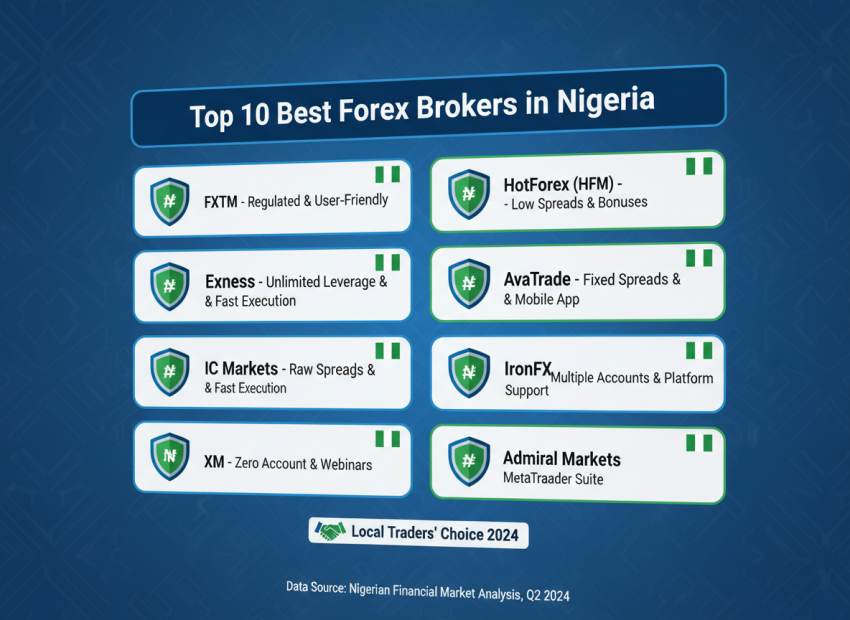
Forex trading has emerged as a significant avenue for wealth creation among Nigerians, attracting both seasoned investors and new entrants. The dynamic nature of the global currency market, coupled with technological advancements, has made online forex trading increasingly accessible. However, navigating the multitude of available forex brokers to find a trustworthy and suitable partner can be a daunting task.
This comprehensive guide aims to simplify that process by presenting a meticulously researched review of the top 10 best forex brokers for Nigerian traders. We delve into essential criteria such as regulatory compliance, competitive fees, robust trading platforms like MT4/MT5, and convenient local payment methods. Our goal is to empower you with the knowledge to make an informed decision, ensuring a secure and optimized trading experience tailored to the Nigerian market.
Understanding Forex Trading and Regulation in Nigeria
Navigating the forex market in Nigeria requires more than just identifying a broker; it demands a clear understanding of the local legal and regulatory landscape. While the previous section set the stage for selecting a reliable partner, this segment will delve into the foundational aspects that govern forex trading within the country.
We will explore the legality of forex operations for Nigerian traders and examine the roles of both local and international regulatory bodies. This crucial insight will empower traders to make informed decisions, ensuring they operate within a compliant and secure environment.
The Legality and Landscape of Forex Trading for Nigerians
Forex trading in Nigeria is entirely legal and has seen an explosion in popularity, particularly among the tech-savvy younger generation seeking income diversification. While the Central Bank of Nigeria (CBN) and the Securities and Exchange Commission (SEC) oversee the broader financial landscape, there are no specific laws prohibiting individuals from trading the foreign exchange market with their own capital.
However, a critical distinction exists regarding the nature of the activity:
-
Personal Trading: Fully legal and accessible to any resident using their own funds.
-
Asset Management: Raising capital from third parties to trade on their behalf is strictly regulated and requires a specific license from the CBN.
The current landscape is shaped by the volatility of the Naira (NGN), which is heavily influenced by oil price fluctuations. This economic environment has driven local traders toward international online forex trading platforms that offer access to more stable global currency pairs, high leverage, and advanced tools like MT4/MT5.
Regulatory Framework: Local (CBN, SEC) and International Bodies
The regulatory landscape in Nigeria is primarily governed by two entities: the Central Bank of Nigeria (CBN) and the Securities and Exchange Commission (SEC). While the CBN manages foreign exchange policy and Naira stability, the SEC oversees the broader capital markets. Currently, there is no specific local licensing framework dedicated solely to retail online forex brokers, which creates a reliance on international oversight.
To ensure fund safety, Nigerian traders should prioritize brokers regulated by reputable global bodies. These include:
-
Tier-1 Regulators: The Financial Conduct Authority (FCA) in the UK and the Australian Securities and Investments Commission (ASIC).
-
Tier-2 Regulators: The Cyprus Securities and Exchange Commission (CySEC) and the Financial Sector Conduct Authority (FSCA) in South Africa.
These international licenses provide critical protections, such as segregated client accounts and negative balance protection, which are not yet fully codified for retail FX within the local Nigerian framework.
Key Criteria for Choosing a Forex Broker in Nigeria
Having established the critical importance of robust regulation, particularly from Tier-1 international bodies, for securing your trading capital, the next crucial step for Nigerian traders is to evaluate brokers based on a broader set of operational criteria. While regulatory compliance forms the bedrock of trust, a truly optimal trading experience hinges on several other practical factors that directly impact your profitability and ease of use.
This section will guide you through the essential considerations beyond regulation, helping you discern which broker best aligns with your individual trading style, financial capacity, and strategic goals. Understanding these key criteria is paramount to making an informed decision and setting yourself up for success in the dynamic forex market.
Essential Factors: Regulation, Fees, and Trading Platforms
Beyond the foundational aspect of regulation, which ensures a secure trading environment, several other essential factors significantly influence a Nigerian trader’s choice of a forex broker. These include:
-
Fees and Costs: Understanding the fee structure is paramount. Traders should scrutinize spreads (the difference between bid and ask prices), commissions per trade, and swap rates for overnight positions. Competitive fees directly impact profitability, especially for active traders. Transparency in pricing is a hallmark of a reputable broker.
-
Trading Platforms: The trading platform is your primary interface with the market. Industry-standard platforms like MetaTrader 4 (MT4) and MetaTrader 5 (MT5) are highly favored for their advanced charting tools, analytical capabilities, and support for automated trading (Expert Advisors). A user-friendly, stable, and feature-rich platform is crucial for efficient trade execution and analysis.
Practical Considerations: Minimum Deposit, Payment Methods, and Customer Support
Beyond regulation and fees, the logistical ease of managing your account is paramount. For Nigerian traders, minimum deposit requirements vary significantly; while some brokers offer "no minimum" accounts, a practical starting capital of $100 to $500 is recommended to manage leverage effectively and avoid rapid margin calls.
Payment methods are a critical differentiator. Top-tier brokers catering to the local market now support:
-
Local Bank Transfers: Direct NGN deposits to avoid high conversion fees and exchange rate volatility.
-
E-wallets: Fast processing via platforms like Neteller, Skrill, or PayPal.
-
Card Payments: Instant funding through Visa and Mastercard.
Finally, prioritize customer support with high accessibility. Ideally, look for brokers providing 24/5 or 24/7 assistance via live chat, email, and local Nigerian phone numbers. Having a broker with a local representative office or dedicated support for the GMT+1 timezone ensures that technical issues are resolved without delay.
Top 10 Best Forex Brokers for Nigerian Traders (Detailed Reviews)
Having established the importance of local payment methods and regulatory oversight, we now turn our attention to the specific providers that lead the market. Selecting a trading partner requires balancing technical performance with local accessibility. In this section, we provide a rigorous analysis of the top 10 forex brokers currently serving the Nigerian market.
Our evaluation focuses on those that offer the best combination of low spreads, high-speed execution, and Naira-friendly account options. Whether you are a scalper requiring ECN execution or a beginner looking for robust educational tools, these reviews highlight the unique strengths and potential drawbacks of each firm. This deep dive is designed to help you make a data-driven decision based on your specific trading style and capital requirements.
Reviewing the Top-Ranked Brokers: A Deep Dive into Key Offerings
Building on the essential criteria, let’s delve into the specific offerings of some top-ranked brokers that cater effectively to Nigerian traders. These platforms distinguish themselves through a combination of competitive conditions, advanced tools, and accessibility.
-
FP Markets stands out for its robust copy trading environment, a popular strategy among Nigerian traders. It offers competitive, commission-based trading with raw spreads from 0.0 pips for a commission of $6.00 per 1.0 standard round lot. FP Markets also upgrades the MT4/MT5 platforms with 12 plugins, Trading Central, and Autochartist, enhancing analytical capabilities.
-
For beginners, XTB is notable for its zero minimum deposit requirement, making it highly accessible and reducing the barrier to entry. It provides a user-friendly platform and extensive educational resources.
-
Meanwhile, Pepperstone excels in execution, offering true ECN trading on popular platforms like MT4, MT5, cTrader, and TradingView, appealing to traders seeking superior speed and transparency in their trades. These brokers exemplify the diverse offerings available, catering to various trading styles and experience levels.
Comparing Other Leading Brokers: Unique Selling Points and Local Relevance
Beyond the primary market leaders, several other brokerages distinguish themselves through deep local integration and specialized trading conditions. For Nigerian traders, local relevance often hinges on the ability to bypass exchange rate volatility by using Naira (NGN) base accounts. This allows for seamless deposits and withdrawals via local bank transfers and mobile money, effectively avoiding the high conversion fees associated with USD-denominated accounts.
Key differentiators among these leading firms include:
-
Localized Support: Dedicated account managers who understand the Nigerian financial landscape and offer support during local business hours.
-
ECN Execution: Low-latency connectivity to global liquidity pools, essential for scalpers and high-frequency traders in the region.
-
Flexible Leverage: Options ranging up to 1:500 or higher, catering to those starting with smaller capital bases.
-
Educational Hubs: Physical presence or seminars in cities like Lagos and Abuja, providing hands-on training for beginners.
These brokers bridge the gap between global market access and the practical needs of the domestic investor.
Advanced Trading Conditions and Tools for Nigerian Traders
While local support and NGN account options provide a necessary foundation, achieving long-term profitability in the Nigerian market requires a focus on technical efficiency. Professional traders must look beyond the surface to evaluate the execution models and cost structures that directly impact their bottom line. Understanding how a broker manages liquidity and order flow is essential for minimizing slippage and maximizing returns.
Furthermore, the technological infrastructure—ranging from industry-standard platforms like MT4/MT5 to sophisticated copy trading tools—plays a pivotal role in a trader’s success. By leveraging these advanced resources, Nigerian traders can bridge the gap between local constraints and global market opportunities, ensuring their strategy is supported by robust, high-speed performance.
Optimizing Performance: Spreads, Leverage, and Execution Models
To achieve professional-grade results, Nigerian traders must look beyond basic platform access and scrutinize the underlying execution environment. Performance optimization hinges on three technical pillars:
-
Spreads: For high-frequency traders, Raw ECN spreads starting from 0.0 pips are essential to minimize trading overhead. While commission-free accounts offer simplicity, the tighter spreads of commission-based models typically yield better long-term value for active participants.
-
Leverage: Most top-tier brokers serving the Nigerian market offer leverage up to 1:500. This provides significant market exposure with minimal capital, though disciplined risk management is vital to protect your NGN balance from volatility.
-
Execution Models: Prioritize brokers utilizing ECN or STP (Straight Through Processing) models. These ensure direct market access, reducing the risk of price manipulation and ensuring faster execution speeds with minimal slippage—critical during high-impact news events.
Leveraging Technology: MT4/MT5, Copy Trading, and Educational Resources
Beyond optimizing core trading conditions, leveraging advanced technology is paramount for sustained success. The MetaTrader 4 (MT4) and MetaTrader 5 (MT5) platforms remain industry standards, offering robust charting tools, technical indicators, and support for automated trading via Expert Advisors (EAs). Nigerian traders benefit immensely from brokers that enhance these platforms with additional plugins and analytical resources.
Copy trading is another powerful technological advantage, allowing less experienced traders to mirror the strategies of seasoned professionals. Many top brokers integrate popular copy trading services like Myfxbook Autotrade or offer proprietary solutions, providing a pathway to diversify strategies and potentially improve returns. Furthermore, comprehensive educational resources—ranging from webinars and tutorials to market analysis—are crucial for continuous skill development, empowering traders to adapt and thrive in the dynamic forex market.
Maximizing Your Forex Trading Experience in Nigeria
Having explored the advanced technological tools and educational resources that empower Nigerian traders, it’s crucial to shift our focus to the practicalities that underpin a successful and sustainable forex trading journey. Beyond sophisticated platforms and analytical insights, understanding the operational aspects of trading within the Nigerian context is paramount.
This section will guide you through optimizing your trading experience by addressing essential considerations such as managing minimum capital requirements, ensuring secure payment methods, and navigating the unique advantages and inherent risks of the forex market in Nigeria. By integrating these practical insights with sound trading practices, you can build a robust foundation for long-term success.
Practicalities for Nigerian Traders: Minimum Capital & Secure Payment Methods
To effectively transition from advanced tools to live execution, Nigerian traders must navigate the logistical realities of account funding. While several leading foreign exchange providers offer zero minimum deposit accounts, a practical starting capital of $100 to $500 (approximately ‖160,000 – ‖800,000) is recommended to manage leverage safely and absorb market volatility without immediate margin calls.
Reliable payment infrastructure is critical for seamless entry and exit. The best forex brokers in Nigeria support a variety of secure methods:
-
Local Bank Transfers: Direct NGN deposits via Nigerian commercial banks to avoid high exchange rate markups.
-
Debit/Credit Cards: Instant funding via Visa and Mastercard.
-
E-wallets: Popular options like Skrill and Neteller for rapid processing.
-
Naira (NGN) Accounts: Some brokers offer NGN-denominated accounts, which eliminate currency conversion fees and preserve capital.
Using regulated channels ensures that your funds remain protected under standard financial protocols.
Advantages, Risks, and Best Practices for Sustainable Trading
Building upon the practicalities of capital and payment, understanding the broader landscape of forex trading in Nigeria involves recognizing both its significant advantages and inherent risks, alongside adopting best practices for long-term success.
Advantages:
-
Market Accessibility: Forex offers 24/5 trading, providing flexibility for Nigerian traders.
-
Diversification: It allows for portfolio diversification beyond local assets, potentially hedging against Naira volatility.
-
High Liquidity: The global forex market’s immense liquidity ensures efficient trade execution.
Risks:
-
Leverage: While amplifying gains, high leverage can also magnify losses rapidly.
-
Market Volatility: Currency markets can be highly unpredictable, especially with global economic shifts.
-
Scams: The presence of unregulated entities poses a risk, underscoring the need for due diligence.
Best Practices for Sustainable Trading:
-
Robust Risk Management: Implement strict stop-loss orders and never risk more than a small percentage of your capital per trade.
-
Continuous Education: Stay informed about market analysis, economic indicators, and trading strategies.
-
Emotional Discipline: Avoid impulsive decisions driven by fear or greed.
-
Choose Regulated Brokers: Prioritize brokers with strong international regulation to safeguard your funds and ensure fair trading conditions.
Conclusion
Selecting the right partner from the top 10 best forex brokers in Nigeria is the final step in your journey toward market participation. While the landscape offers significant opportunities for NGN-based deposits and high-leverage trading, success hinges on your ability to balance ambition with disciplined risk management.
By prioritizing regulated platforms with ECN execution and robust MT4/MT5 tools, you position yourself for long-term sustainability. As you move forward:
-
Utilize demo accounts to test local execution speeds.
-
Verify regulatory credentials independently.
-
Maintain a strict focus on capital preservation.