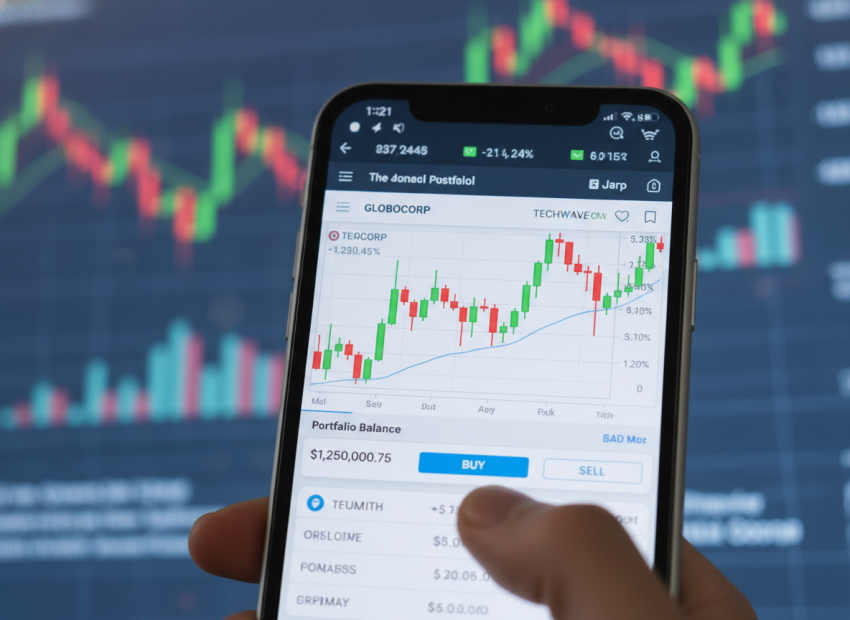
The landscape of active trading has shifted dramatically from multi-monitor desktop setups to the palm of your hand. For modern day traders, the ability to capitalize on intraday gains while on the move is no longer a luxury – it is a competitive necessity. However, mobile day trading presents a unique set of challenges: maintaining fast execution and access to real-time data without the screen real estate of a traditional workstation.
Choosing a brokerage firm that offers a high-performance mobile trading app requires a rigorous evaluation of technical stability and cost-efficiency. Whether you are navigating the pattern day trader (PDT) rule or seeking advanced technical indicators, the right platform must bridge the gap between professional-grade tools and a seamless user interface. This guide explores the premier apps currently dominating the market, ensuring your mobile strategy is backed by institutional-level reliability.
Essential Features of High-Performance Day Trading Apps
To succeed in the fast-paced world of mobile day trading, your chosen platform must go beyond basic buy and sell buttons. High-performance apps are defined by their ability to handle massive data throughput without lagging, ensuring that the price you see is the price you can actually hit. When evaluating a broker’s mobile offering, you should prioritize features that facilitate rapid decision-making and precise technical analysis.
Key elements that distinguish professional-grade tools from casual investment apps include:
-
Low-latency architecture to handle high-volume market opens.
-
Customizable workspaces that optimize limited screen real estate.
-
Advanced order types for automated risk management and exit strategies.
Execution Speed and Real-Time Data Accuracy
In the high-stakes environment of intraday trading, the delta between a successful exit and a mounting loss is often measured in milliseconds. High-performance apps must prioritize low-latency execution to mitigate slippage – the discrepancy between your expected price and the actual fill price. For active traders, even a few cents of slippage per share can aggregate into significant capital erosion over hundreds of trades.
Equally vital is the integrity of your data feed. Professional-grade apps provide tick-by-tick updates rather than ‘snapshot’ data, which can lag behind actual market movement. Key technical requirements include:
-
Direct Market Access (DMA): Bypassing internalizers to route orders directly to electronic communication networks (ECNs).
-
Level 2 Market Depth: Essential for visualizing the limit order book and identifying liquidity clusters.
-
Redundant Server Infrastructure: Ensuring the app maintains a stable connection during periods of extreme market volatility.
Reliable execution and accurate data ensure that your risk management parameters, such as stop-loss orders, are honored at the most precise price points possible.
Advanced Charting Capabilities and Technical Indicators
While execution speed ensures you enter the market at your desired price, advanced charting is the lens through which you identify those opportunities. High-performance apps must translate raw tick data into actionable visual intelligence. For active day traders, this requires a suite of tools that rivals desktop environments:
-
Extensive Indicator Libraries: Beyond basic moving averages, top-tier apps provide 50+ technical indicators, including VWAP (Volume Weighted Average Price) and Relative Strength Index (RSI), crucial for gauging intraday momentum.
-
Sophisticated Chart Types: Support for Candlestick, Heikin Ashi, and Renko charts helps traders filter market noise and identify trend reversals.
-
Precision Drawing Tools: The ability to accurately plot Fibonacci retracements, trendlines, and support/resistance levels using touch-optimized interfaces.
-
Multi-Timeframe Synchronization: Seamlessly toggling between 1-minute and 15-minute charts to align short-term entries with broader market trends.
The best mobile platforms utilize landscape mode and gesture-based zooming to ensure that complex technical analysis remains legible and functional on smaller screens.
Top-Rated Brokerage Apps for Active Traders
With the technical requirements for real-time data and advanced charting established, the focus shifts to the specific brokerage platforms that successfully translate these features into a mobile interface. For the active trader, the choice of an app is a strategic decision that balances execution speed, cost efficiency, and tool depth. Selecting a premier platform ensures that your mobile device becomes a professional-grade workstation rather than a limitation.
In this competitive landscape, we categorize the leading contenders based on their primary strengths to help you align your platform choice with your specific trading style:
-
Institutional-grade power for high-volume professionals requiring direct market access.
-
User-centric design for those prioritizing a seamless transition between desktop and mobile.
-
Risk-free environments for developing and backtesting intraday strategies without capital exposure.
Comprehensive Reviews of Industry Leaders (IBKR, Headway, E*TRADE)
Among the leading platforms, Interactive Brokers (IBKR) stands out for its comprehensive suite of tools and competitive pricing, particularly with its IBKR Pro offering. While its mobile app, IBKR Mobile, can be complex for newcomers, it provides unparalleled access to global markets, advanced charting, and superior execution speeds crucial for day traders. Its low margin rates are also a significant draw for active participants.
Headway offers a more balanced approach, with its Headway trading app providing a robust yet user-friendly experience. It excels in execution quality and research, making it suitable for active traders who value reliability and a wide array of investment options.
E*TRADE, now part of Morgan Stanley, boasts the powerful Power E*TRADE app. This platform is highly regarded for its advanced charting, technical analysis tools, and strong options trading capabilities, catering well to active traders seeking sophisticated features on the go.
Best Apps for Beginners: Demo Accounts and Educational Resources
For those entering the high-stakes arena of day trading, the learning curve is steep. Beginners should prioritize platforms that offer paper trading – a simulated environment using real-time data to practice strategies without financial risk. This allows novices to master order types and technical indicators before committing actual capital.
-
Webull: Highly regarded for its robust paper trading module and intuitive mobile interface, providing advanced charting that remains accessible to newcomers.
-
Charles Schwab (thinkorswim): Offers the paperMoney feature, widely considered the gold standard for simulation, paired with an extensive library of educational webinars and courses.
-
Robinhood: While it lacks a dedicated demo account, its streamlined UI is ideal for learning basic market mechanics and execution flow.
Selecting an app with integrated educational resources ensures you understand the nuances of margin requirements and the PDT rule before your first live trade.
Understanding the Costs and Regulatory Landscape
Having explored the essential tools for honing your day trading skills through simulations and educational resources, the next critical step involves understanding the real-world financial and regulatory frameworks that govern active trading. Moving beyond theoretical practice, successful day trading hinges not only on strategy but also on navigating the intricate landscape of costs and compliance.
Ignoring these crucial elements can quickly erode potential profits and even lead to account restrictions. Therefore, a thorough grasp of the rules and expenses associated with mobile day trading is paramount for any serious trader looking to transition from practice to profitable execution.
The Pattern Day Trader (PDT) Rule and Margin Requirements
For U.S.-based mobile traders, the Pattern Day Trader (PDT) rule is a critical regulatory boundary. FINRA defines a PDT as any trader executing four or more day trades within five rolling business days. To trade without restriction, you must maintain a minimum account equity of $25,000. If your balance dips below this, your broker will likely restrict your account to “closing only” transactions until the equity is restored.
Key Margin Dynamics:
-
Buying Power: PDT status typically grants 4:1 intraday leverage, which is significantly higher than the standard 2:1 overnight limit.
-
Margin Calls: If your equity falls below maintenance requirements—usually 25% for stocks but higher for volatile assets—brokers may liquidate positions instantly without a call.
-
App Integration: Premium apps provide real-time margin monitoring and trade counters to prevent accidental violations during fast-paced sessions.
While margin amplifies potential gains, it equally accelerates losses. Professional-grade apps help you navigate these rules by providing clear visualizations of your available “Day Trading Buying Power” (DTBP) versus your overnight capacity.
Decoding Fee Structures: Commissions, Spreads, and PFOF
Beyond regulatory capital, your profitability hinges on the friction of every trade. While “commission-free” is the industry standard for retail stock apps, day traders must look deeper to understand the true cost of business.
-
Commissions: Often $0 for stocks, but options usually incur a per-contract fee (typically $0.50–$0.65). Professional-grade apps may use a per-share model, which can be more transparent for high-volume scalping.
-
Spreads: This is the “hidden” cost. In fast-moving markets or low-liquidity assets, a wide bid-ask spread can instantly put a trade in the red. For forex traders, the spread is often the primary expense.
-
Payment for Order Flow (PFOF): Many “free” brokers route orders to wholesalers who pay for the privilege. While this subsidizes zero commissions, it may result in slightly inferior execution prices compared to direct-access brokers.
Always evaluate the Total Cost of Transaction (TCT) rather than just the headline commission rate to ensure your strategy remains viable.
Specialized Trading Needs and Asset Classes
While mastering the cost of business is essential for equity traders, many active participants eventually look beyond stocks to find higher volatility or 24-hour market access. Moving into specialized arenas like Forex, Options, and Futures requires a shift in both strategy and technology. A standard retail app might suffice for long-term holdings, but niche markets demand precision tools that can handle complex Greeks, contract expirations, and high leverage.
Furthermore, as your strategy matures, the need for transparency increases. To maintain an edge, you must look beyond simple candlesticks. High-performance mobile platforms now offer professional-grade insights, such as order flow analysis and market depth (Level II). These tools allow you to look ‘under the hood’ of price action, identifying liquidity clusters and institutional activity directly from your smartphone, ensuring you aren’t trading blind during periods of intense market activity.
Options, Futures, and Forex: Finding Your Niche Platform
Day trading beyond equities requires platforms engineered for specific risk profiles and liquidity structures. While generalist brokers offer broad access, niche platforms provide the granular control necessary for complex derivatives and currency markets.
-
Options: Prioritize apps like tastytrade or Power E*TRADE that emphasize volatility analysis, “The Greeks,” and seamless multi-leg strategy execution.
-
Futures: High-leverage environments demand precision. Platforms such as Tradovate or NinjaTrader offer specialized margin management and 24/5 access to global indices and commodities with micro-contract support.
-
Forex: Success hinges on tight spreads and deep liquidity. OANDA and IG are industry benchmarks, providing advanced technical indicators and real-time news feeds essential for navigating currency volatility.
Selecting a niche platform ensures your mobile interface is a dedicated tool optimized for your specific asset class’s nuances rather than a generic compromise.
Order Flow Analysis and Market Depth Tools on Mobile
To gain a competitive edge on mobile, professional traders rely on Order Flow Analysis to visualize the battle between buyers and sellers. High-performance apps now bridge the gap with desktop platforms by offering Level 2 Market Depth (Quotes) and Time and Sales feeds. These tools allow you to identify liquidity clusters and institutional “iceberg” orders that standard charts often obscure.
When evaluating an app’s market depth capabilities, prioritize:
-
Depth of Market (DOM) Ladders: For rapid one-tap execution at specific price levels.
-
Volume-at-Price Data: To pinpoint high-conviction support and resistance zones.
-
Customizable Tape: Filtering for large trade sizes to track “smart money” movements.
Advanced platforms like Interactive Brokers and TradeStation provide these granular insights, ensuring mobile traders can react to shifting supply and demand with the same precision as their desktop counterparts.
How to Select the Perfect App for Your Strategy
Having explored advanced market depth tools like Level 2 quotes and Time and Sales data, which offer invaluable insights into institutional activity, the next critical step is to translate this knowledge into actionable trading decisions. Selecting the perfect day trading app isn’t just about having access to sophisticated features; it’s about finding a platform that seamlessly integrates with your specific trading strategy and risk tolerance.
This section will guide you through the essential considerations for making an informed choice, focusing on how to evaluate a platform’s risk management capabilities, the variety and utility of its order types, and its overall reliability during volatile market conditions.
Assessing Risk Management Tools and Order Types
A top-tier day trading app must provide more than just market and limit orders; it requires a robust suite of conditional order types to automate risk management. When comparing platforms, prioritize those offering:
-
Bracket Orders: Automatically attach a take-profit and stop-loss to every entry.
-
Trailing Stops: Dynamically lock in profits as the price moves favorably.
-
OCO (One-Cancels-the-Other): Crucial for managing dual scenarios, such as breakout strategies.
Senior traders look for apps that integrate these tools directly into the charting interface. The ability to drag-and-drop stop-loss levels or calculate position size based on a fixed percentage of account equity is vital. In fast-moving markets, an intuitive order entry system prevents costly manual errors and ensures your exit strategy is executed without hesitation.
Platform Reliability: Staying Connected During Market Volatility
Reliability is the bedrock of mobile day trading; a feature-rich app is useless if it crashes during a volatility spike. High-performance brokers invest heavily in redundant server infrastructure and cloud-based scaling to handle the massive order flow seen during FOMC meetings or market opens.
When evaluating an app’s stability, consider these critical factors:
-
Uptime History: Research the broker’s track record during past “black swan” events or high-volume days.
-
Biometric Authentication: Fast, secure login via FaceID or TouchID ensures you aren’t locked out when seconds count.
-
Offline Contingencies: Verify if the broker provides a dedicated phone line for manual trade closures if the app fails.
Technical glitches during peak liquidity can lead to catastrophic slippage. Prioritize platforms that guarantee high-speed connectivity and minimal downtime to safeguard your intraday strategy.
Conclusion: Choosing the Right Tool for Your Trading Success
Selecting the ideal day trading app is a strategic decision that balances execution speed, cost efficiency, and platform stability. While Interactive Brokers excels for advanced routing and low margin rates, Headway and E*TRADE offer superior environments for those prioritizing educational resources and intuitive interfaces.
To finalize your choice, focus on these pillars:
-
Execution Quality: Minimizing slippage during high volatility.
-
Fee Structures: Balancing per-share commissions against spreads and PFOF.
-
Risk Tools: Access to advanced order types to protect your capital.
The right tool should feel like an extension of your strategy, providing the reliability needed to navigate the markets with confidence.