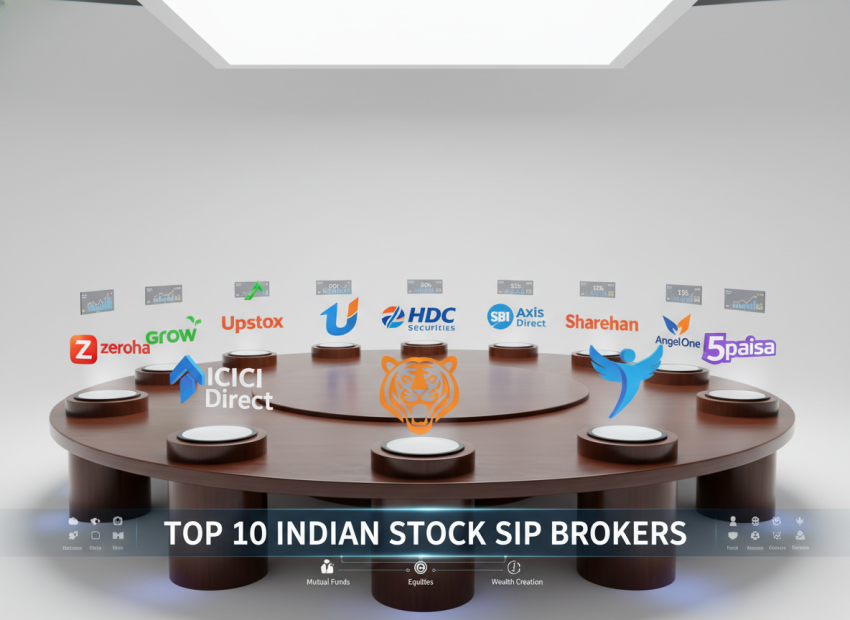
The Indian financial landscape has undergone a paradigm shift, with retail investors moving beyond traditional savings toward direct equity participation. While Mutual Fund SIPs have long been the standard for disciplined investing, Equity SIPs (Systematic Investment Plans in stocks) are rapidly gaining traction. By automating the purchase of individual shares at regular intervals, investors can leverage rupee-cost averaging to mitigate market volatility and build long-term wealth without the need to time the market.
However, the success of a stock SIP strategy hinges on the platform you choose. Whether you prefer discount brokers for low-cost execution or full-service firms for research-backed insights, selecting a SEBI-registered partner is critical. This review evaluates the top 10 stock SIP brokers in India, focusing on brokerage fees, automation features, and platform reliability to help you streamline your path to financial independence.
Understanding Systematic Investment Plans in Stocks
Building on the understanding that Equity SIPs offer a disciplined pathway to long-term wealth creation, this section will demystify the concept of systematic investing directly in stocks. While the previous discussion highlighted the importance of selecting the right broker, a foundational grasp of how Stock SIPs operate is crucial for any investor.
We will explore the core principles behind an Equity SIP, examining its unique advantages for retail investors in the Indian market. Furthermore, we will draw a clear distinction between Equity SIPs and the more familiar Mutual Fund SIPs, equipping you with the knowledge to make informed investment choices.
What is an Equity SIP and Why Invest in Stocks via SIP?
An Equity SIP (Systematic Investment Plan in shares) is a disciplined investment strategy where you invest a fixed amount or a specific quantity of shares in individual stocks at regular intervals. Instead of attempting to time the market with a lump-sum purchase, a stock SIP automates your entry into the equity market, making it an ideal tool for long-term wealth seekers.
Why Invest in Stocks via SIP?
-
Rupee Cost Averaging: This mechanism ensures you buy more shares when prices are low and fewer when they are high, effectively lowering your average cost per share over time.
-
Disciplined Wealth Creation: It removes emotional bias and the stress of market volatility, ensuring you stay consistent with your financial goals.
-
Direct Ownership and Control: Unlike mutual funds, you have the flexibility to handpick specific companies you believe in, allowing for a more personalized portfolio.
-
Automated Stock Investing: Leading discount brokers in India now offer robust automation features, allowing retail investors to build significant positions in blue-chip or growth stocks with minimal manual intervention.
Equity SIP vs. Mutual Fund SIP: Key Differences
While both strategies leverage the power of compounding and rupee cost averaging, they cater to different investor temperaments. A Mutual Fund SIP involves pooling capital into a fund managed by a professional, where you pay an annual expense ratio. Conversely, an Equity SIP grants you direct ownership of specific shares, offering a more granular and personalized portfolio without the recurring management fees of a fund.
| Feature | Equity SIP (Stocks) | Mutual Fund SIP |
|---|---|---|
| Control | High; you select individual companies. | Low; the fund manager decides holdings. |
| Costs | Transaction-based brokerage and STT. | Annual Expense Ratio (0.5% to 2.25%). |
| Diversification | Concentrated; requires manual balancing. | Instant diversification across sectors. |
| Management | Self-directed; requires active research. | Professionally managed by AMCs. |
Equity SIPs are particularly effective for investors seeking to build a high-conviction portfolio while avoiding the overhead costs associated with mutual fund houses.
Essential Factors When Selecting Your Stock SIP Broker
Having understood the fundamental differences and unique benefits of investing in stocks through Systematic Investment Plans versus mutual funds, the next critical phase involves choosing the right brokerage firm. This decision is pivotal, as your broker will be the primary facilitator of your investment journey, directly influencing your costs, convenience, and overall experience in building long-term wealth.
With a diverse landscape of stockbrokers in India, each offering varied services and pricing structures, a thorough evaluation is essential. This section will outline the key considerations and factors you must weigh to select a broker that not only supports your stock SIP strategy but also provides the tools and support necessary for successful, disciplined investing.
Brokerage, Fees, and Hidden Charges for Stock SIPs
When evaluating the best stock SIP brokers in India, the cost structure is paramount. Most discount brokers offer zero brokerage on equity delivery, making them the most cost-effective choice for systematic investing. In contrast, full-service brokers often charge a percentage-based fee (ranging from 0.1% to 0.5%), which can significantly erode your compounded returns over decades.
Beyond the headline brokerage, investors must scrutinize the following:
-
Statutory Charges: These are non-negotiable and include STT (0.1% on buy/sell), GST (18% on brokerage and transaction fees), and SEBI turnover fees.
-
DP Charges: A flat fee (typically ‡13.50 + GST) charged per company when you sell shares from your demat account.
-
AMC: Annual Maintenance Charges that can range from zero to ‡500 per year.
-
Automation Fees: Some platforms may charge a nominal fee for the convenience of managing automated SIP instructions.
Comparing these friction costs is essential to ensure your long-term wealth creation remains efficient.
Platform Features, User-Friendliness, and Automation Capabilities
Beyond the cost of trading, the technological infrastructure of a broker determines the success of your Equity SIP. A top-tier platform must offer seamless automated stock investing to ensure discipline without manual intervention. When evaluating the best apps for stock SIP in India, prioritize these three pillars:
-
Automation & Mandates: Look for brokers supporting UPI Autopay or e-Mandates. This ensures the system automatically deducts funds and executes the Systematic Investment Plan in shares on your scheduled date, eliminating emotional bias.
-
Intuitive Interface: For beginners, a clutter-free dashboard is vital. The platform should allow you to modify, pause, or resume SIPs with a single click.
-
Basket Capabilities: Advanced platforms enable "Stock Baskets," allowing you to run a single SIP across a diversified portfolio of 5-10 stocks simultaneously.
While discount brokers typically offer superior app speed, full-service brokers often integrate high-quality research directly into the SIP setup flow.
Detailed Review of the Top 10 Stock SIP Brokers in India
Transitioning from the technicalities of automation and platform design, we now move to the practical selection of a partner for your wealth-building journey. The Indian market offers a diverse range of intermediaries, primarily categorized into discount brokerages and full-service firms. While the former excels in providing low-cost, high-tech environments for self-directed investors, the latter provides the research-heavy support often required for complex portfolio management.
In this section, we analyze the top 10 platforms that have successfully integrated robust Equity SIP features. Our review focuses on:
-
Execution Efficiency: How seamlessly the broker handles recurring orders.
-
Cost-Benefit Ratio: Balancing brokerage fees against value-added services.
-
Investor Suitability: Identifying which platforms cater to beginners versus seasoned wealth seekers.
Key Features and Offerings for Each Broker
The Indian brokerage landscape provides distinct advantages for Equity SIP investors through two primary models: discount and full-service.
Top Discount Brokers (Cost-Efficiency):
-
Zerodha: Features "Kite" for basket-based SIPs with zero delivery brokerage.
-
Upstox: Offers automated scheduling and a high-speed mobile interface for seamless execution.
-
Groww: Best for beginners due to its ultra-simple, one-tap SIP setup process.
-
Angel One: Integrates robo-advisory (ARQ) to help automate stock selection and portfolio rebalancing.
-
5paisa: Extremely cost-effective with flat-fee structures for systematic traders.
Top Full-Service Brokers (Research & Advisory):
-
ICICI Direct: Provides flexible "Equity SIP" frequencies and seamless 3-in-1 account integration.
-
HDFC Securities: Offers professional research and a dedicated "DiY SIP" module for long-term wealth.
-
Motilal Oswal: Focuses on high-conviction, research-backed SIP recommendations for serious investors.
-
Sharekhan: Features a specialized "SIP in Stocks" tool and extensive offline advisory support.
-
Kotak Securities: Combines robust automation with personalized wealth management and banking convenience.
Comparing Brokers: Best for Beginners, Active Investors, and Long-Term Wealth
Building on the distinct offerings, selecting the ideal broker hinges on your investment style. * For Beginners: Groww and Zerodha stand out with their intuitive platforms and simplified user experience, making them excellent entry points for new investors. Upstox also offers a highly user-friendly mobile app. * For Active Investors & Frequent Traders: Zerodha and 5Paisa are top choices, known for their flat-fee brokerage models and robust trading platforms that cater to high-volume execution. Upstox provides competitive pricing and advanced tools for active engagement. * For Long-Term Wealth Creation & Advisory: Full-service brokers like Motilal Oswal, Sharekhan, ICICI Direct, and Kotak Securities excel. They offer in-depth research, personalized advisory services, and comprehensive wealth management tools, crucial for sustained portfolio growth and strategic planning.
Setting Up and Maximizing Your Stock SIP Journey
Selecting the right platform is only the first step; the true value of a Systematic Investment Plan in shares lies in its execution and long-term maintenance. Transitioning from a commercial investigation to active investing requires a streamlined approach to account setup and a disciplined strategy for portfolio oversight. To ensure your journey toward wealth creation is both efficient and sustainable, you must navigate the initial onboarding process with precision and adopt a management mindset that prioritizes consistency. The following guidance provides the practical framework needed to activate your Equity SIP and optimize your investment trajectory using automated stock investing tools provided by India’s leading brokers.
Step-by-Step Guide to Opening a Demat Account and Starting a Stock SIP
Starting your Equity SIP journey is a streamlined digital process designed for the modern investor. To begin, select a SEBI registered broker from our top 10 list that aligns with your cost and research preferences.
-
KYC Documentation: Prepare your PAN card, Aadhaar (linked to your mobile for e-KYC), and a bank statement or cancelled cheque.
-
Digital Onboarding: Complete the online application on the broker’s platform. This usually involves an In-Person Verification (IPV) via a short video.
-
Configure Your SIP: Once your best demat account for SIP is active, navigate to the ‘SIP’ or ‘Basket’ section. Select your desired stocks and choose between an Amount-based or Quantity-based approach.
-
Automate via Mandate: Set up an e-mandate with your bank to enable automated stock investing. This ensures consistent contributions, leveraging rupee cost averaging for long-term wealth.
Tips for Long-Term Wealth Creation and Portfolio Management
To truly harness the power of Stock SIPs for long-term wealth, consider these strategic tips:
-
Maintain Discipline and Consistency: The core strength of SIPs lies in regular, automated investments. Stick to your chosen frequency and amount, regardless of market fluctuations, to benefit from rupee-cost averaging.
-
Diversify Your Portfolio: While SIPs automate investment in individual stocks, ensure your overall portfolio is well-diversified across sectors and market caps to mitigate risk.
-
Regular Portfolio Review: Periodically assess the performance of your SIP stocks. Rebalance if necessary to align with your financial goals and risk tolerance, but avoid frequent, impulsive changes.
-
Focus on Quality: Invest in fundamentally strong companies with proven track records and growth potential. Long-term wealth is built on the resilience of quality businesses.
-
Embrace the Power of Compounding: Allow your investments sufficient time to grow. The longer you stay invested, the more significant the impact of compounding on your returns.
Regulatory Landscape and Investor Safety
While optimizing your stock SIPs through strategic planning is essential for maximizing returns, a secure investment journey hinges equally on a robust regulatory framework. The Indian stock market, like any financial ecosystem, operates under specific rules and guidelines designed to protect investors and maintain market integrity. Understanding this regulatory landscape is paramount for every investor, especially those engaging in systematic investment plans.
This section will delve into the critical aspects of investor safety, exploring the role of regulatory bodies like SEBI in safeguarding your investments and outlining best practices to mitigate risks. A well-informed investor is a well-protected investor, ensuring peace of mind as you build long-term wealth through stock SIPs.
Role of SEBI and Investor Protection Guidelines
Building on the understanding of market dynamics, it’s paramount for Stock SIP investors to grasp the regulatory framework that underpins the Indian securities market. The Securities and Exchange Board of India (SEBI) stands as the primary regulator, tasked with protecting investor interests and promoting the development of the securities market.
SEBI’s role is multifaceted, encompassing:
-
Licensing and Regulation: All stockbrokers operating in India must be registered with SEBI, adhering to strict eligibility criteria and operational guidelines.
-
Market Integrity: SEBI establishes rules to ensure fair trading practices, prevent market manipulation, and maintain transparency.
-
Investor Protection: It mandates robust grievance redressal mechanisms and disclosure norms, ensuring investors have avenues for recourse and access to critical information. This regulatory oversight is crucial for the safety and reliability of your Stock SIP journey.
Understanding Risks and Best Practices for Stock SIP Investors
While SEBI provides a robust safety net, Equity SIP investors must navigate inherent market risks. Unlike mutual funds, a Systematic Investment Plan in shares carries higher concentration risk; if a specific company underperforms, your portfolio feels the direct impact without the cushion of a diversified fund basket.
Best Practices for Success:
-
Diversify Your Basket: Spread investments across 5-10 blue-chip or high-growth stocks to mitigate sector-specific volatility.
-
Focus on Quality: Use automated stock investing tools primarily for fundamentally strong companies with proven track records.
-
Long-term Horizon: SIPs are most effective over 5-10 years, leveraging rupee cost averaging to smooth out market cycles.
-
Regular Monitoring: Review your stock picks quarterly to ensure the business thesis remains intact.
Always utilize SEBI registered brokers to ensure your assets are held securely in a regulated demat account for SIP.
Conclusion
Selecting the right partner for your Equity SIP journey is a pivotal step toward financial independence. Whether you prioritize the low-cost structure of discount brokers like Zerodha and Groww or the comprehensive research of full-service firms like Motilal Oswal, the key is consistency. By leveraging automated stock investing through a SEBI registered broker, you mitigate market volatility and harness the power of compounding. Evaluate your specific needs—be it platform usability or advisory support—and start your Systematic Investment Plan in shares today to build a resilient long-term portfolio.