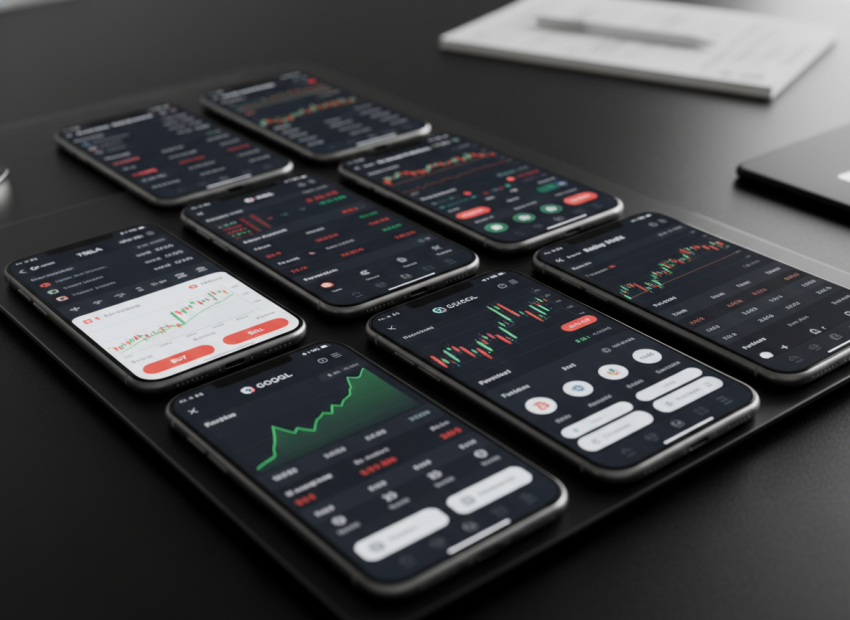
The landscape of retail investing has undergone a seismic shift, moving from traditional desktop terminals to the palms of our hands. Today, mobile trading platforms are no longer just companions to web interfaces; they are the primary gateway for millions of investors worldwide. Whether you are seeking zero commission stock apps to minimize overhead or sophisticated active trader tools for complex technical analysis, the sheer volume of options can be overwhelming.
Choosing the right app requires a strategic balance of low brokerage account fees, robust security, and access to diverse assets like fractional shares and cryptocurrencies. This review provides a comprehensive analysis of the industry’s leading brokerage apps, evaluating them on execution quality, regulatory compliance, and educational resources. Our goal is to help you navigate the trade-offs between legacy institutions and modern fintech disruptors to find your ideal trading partner.
Understanding Broker Apps: Your Gateway to Mobile Trading
Building on our initial overview of the mobile trading landscape, it’s clear that broker apps have become indispensable tools for investors seeking flexibility and immediate access to global markets. These applications transform smartphones into powerful trading terminals, offering a direct gateway to a diverse range of investment opportunities from anywhere at any time.
However, the sheer volume of options available can be overwhelming. To truly leverage the power of mobile trading, it’s crucial to understand what distinguishes a superior broker app from the rest, and what initial factors should guide your selection process to ensure a secure and effective trading experience.
What Defines a Top Broker App?
A top-tier broker app is defined by its ability to balance sophisticated functionality with a seamless mobile user experience. For the modern investor, the "best" app is not merely a portal; it is a robust ecosystem that supports diverse trading styles through specific technical benchmarks.
Key pillars of a leading platform include:
-
Cost Transparency: Beyond the allure of zero commission stock apps, top platforms minimize "hidden" costs such as inactivity fees, high options contract charges, or steep wire transfer fees.
-
Execution Quality: For those utilizing active trader tools, the speed and price at which orders are filled—ideally at or better than the National Best Bid and Offer (NBBO)—is a critical differentiator.
-
Asset Versatility: Integration of fractional shares investing, cryptocurrencies, and complex derivatives allows for comprehensive portfolio management within a single interface.
-
Technical Sophistication: High-performance apps provide real-time data streaming, advanced charting, and paper trading apps for risk-free strategy testing.
-
Platform Reliability: Consistent uptime during high-volatility market events is non-negotiable for maintaining investor confidence and capital protection.
Initial Considerations for App Selection: Security and User Intent
Building on the benchmarks of a top broker app, your initial selection process must prioritize two critical factors: robust security and a clear alignment with your personal trading intent. Before committing, thoroughly vet the platform’s regulatory compliance. Ensure the broker is regulated by reputable bodies like the SEC and FINRA, and that your investments are protected by SIPC insurance. This safeguards your assets against broker failure, offering peace of mind.
Equally important is defining your user intent. Are you a beginner seeking educational resources and a simplified interface, or an experienced trader requiring advanced charting tools and complex order types? Matching the app’s capabilities to your specific trading style and goals is paramount to a productive and satisfying mobile trading experience. Avoid apps that offer features you won’t use, or conversely, lack essential tools for your strategy.
Core Features & Investment Options
Having established the foundational importance of security and aligning a broker app with your specific trading intent, the next crucial step is to delve into the practical capabilities and offerings of these platforms. A top-tier broker app is defined not just by its safety, but by the breadth of investment opportunities it unlocks and the sophistication of its trading environment. This section will explore the diverse range of assets available, from traditional stocks to emerging cryptocurrencies, and evaluate the user experience alongside the advanced tools designed to empower both novice and seasoned traders.
Diversifying Your Portfolio: Asset Availability (Stocks, Crypto, Fractional Shares)
Modern mobile trading platforms have evolved into comprehensive financial hubs where asset variety is a primary differentiator. A top-tier app is no longer defined solely by its interface, but by the breadth of its investment ecosystem.
-
Equities and ETFs: Most leading apps now offer zero-commission trading on US-listed stocks and ETFs, serving as the foundation for both day traders and long-term investors.
-
Cryptocurrency: To compete with dedicated exchanges, many brokers now integrate 24/7 crypto trading for major assets like Bitcoin and Ethereum directly alongside traditional securities.
-
Fractional Shares: This feature is a critical tool for retail diversification. By allowing users to purchase a portion of high-priced stocks for as little as $1, apps lower the barrier to entry for premium companies.
Selecting a platform that supports this "all-in-one" approach enables seamless portfolio rebalancing across diverse asset classes without the friction of managing multiple accounts.
User Experience and Advanced Trading Tools (Charts, Analytics, Paper Trading)
Beyond asset variety, the technical infrastructure of a mobile trading platform determines its long-term viability for an investor. Top-tier apps prioritize a seamless user experience (UX) that balances simplicity for beginners with the depth required by active traders. Key technical features to evaluate include:
-
Advanced Charting: Look for platforms offering multiple timeframes, technical indicators (like Bollinger Bands or RSI), and drawing tools optimized for touchscreens.
-
Real-Time Analytics: Access to live data feeds and sentiment analysis is crucial for timely decision-making.
-
Paper Trading Apps: A robust "demo mode" allows users to practice strategies in a risk-free environment using virtual capital.
For those seeking active trader tools, the ability to customize dashboards and execute complex order types—such as stop-limits or trailing stops—directly from the chart is a significant competitive advantage in modern leading brokerage apps.
Cost Structures, Security, and Regulatory Compliance
While advanced trading tools and intuitive user interfaces are crucial for effective market analysis, a broker app’s true value is also profoundly shaped by its financial framework and underlying trustworthiness. Understanding the costs associated with trading and the measures taken to protect your investments is paramount for any serious trader.
This section delves into the critical aspects of cost structures, including various fees that can impact your profitability, alongside the essential considerations of security and regulatory compliance. These elements collectively determine not only the financial viability of your trading activities but also the safety and integrity of your capital.
Demystifying Fees: Commissions, Account Charges, and Hidden Costs
While many mobile trading platforms market themselves as "zero-commission," the reality of trading costs is often more nuanced. For most retail investors, stock and ETF trades are indeed free, but active traders should scrutinize options contract fees, which typically range from $0.50 to $0.65 per contract.
Beyond trade execution, account-level charges can silently erode your returns. Key areas to monitor include:
-
Inactivity Fees: Charged if no trades are placed within a specific timeframe.
-
ACATS Transfer Fees: Costs associated with moving your portfolio to another broker, often ranging from $50 to $100.
-
Data Subscriptions: Premium charts or Level 2 market data often require monthly fees.
Furthermore, "free" apps often utilize Payment for Order Flow (PFOF), which can result in slightly wider spreads. Understanding these layers ensures you select a platform where the fee structure aligns with your specific trading frequency and volume.
Ensuring Trust and Safety: Regulation, Reliability, and Investor Protection
While low fees are enticing, the security of your capital remains the ultimate priority. A "free" app becomes a liability without robust regulatory oversight. In the U.S., reputable brokers must be registered with the Securities and Exchange Commission (SEC) and be members of the Financial Industry Regulatory Authority (FINRA).
To protect against brokerage insolvency, verify that the firm is a member of the Securities Investor Protection Corporation (SIPC). This typically covers up to $500,000 in securities, including a $250,000 limit for cash. Note that this protects against the firm’s failure, not market losses.
Technical security measures are non-negotiable for mobile-first traders:
-
Multi-Factor Authentication (MFA): Adds a critical layer of protection beyond standard passwords.
-
Biometric Login: Utilizes FaceID or fingerprint scanning for secure, rapid access on mobile devices.
-
Data Encryption: Employs high-level protocols to protect sensitive financial information from interception.
Reliability also extends to execution stability. Research how an app performs during peak market volatility; a platform that crashes during high-volume sessions can cost you significantly more than any commission fee ever would.
Support, Education, and Unique Offerings
While robust security and transparent cost structures are non-negotiable for any reputable broker app, the true value often lies in the comprehensive support and educational resources it provides. These elements are vital for both new and experienced traders navigating the complexities of the market, ensuring they have the knowledge and assistance needed to make informed decisions.
Furthermore, many leading platforms differentiate themselves through unique offerings. These can include competitive interest rates on uninvested cash or attractive promotional incentives, which can add significant value beyond core trading functionalities and enhance the overall user experience.
Bridging the Knowledge Gap: Educational Resources and Customer Support
For many retail investors, the quality of a platform’s educational ecosystem is just as critical as its fee structure. Leading brokerage apps now offer integrated learning centers featuring:
-
On-demand video tutorials and live webinars.
-
Interactive glossaries and real-time market news feeds.
-
Paper trading simulators to practice strategies without financial risk.
Beyond self-service learning, robust customer support serves as a vital safety net. While fintech-native apps often prioritize AI-driven chatbots and extensive FAQs, legacy brokers typically provide 24/7 phone access to licensed professionals. For active traders, the availability of live chat and rapid response times can be the difference between a timely exit and a costly delay. When evaluating a broker, prioritize those that offer a balance of comprehensive documentation and human-led assistance to ensure you are never left navigating complex market events alone.
Beyond the Basics: Interest on Uninvested Cash and Promotional Incentives
Beyond essential support and educational resources, top broker apps often provide additional value through two key offerings: interest on uninvested cash and attractive promotional incentives. Many platforms now offer competitive interest rates on idle cash balances, sometimes exceeding 4%. This can significantly boost returns, especially for those holding substantial cash reserves. However, it’s crucial to scrutinize the fine print, as some brokers offer minimal or no interest, often burying this detail.
Brokerage firms also frequently entice new users with sign-up bonuses, deposit matches, or commission-free trades for a limited period. While these incentives can be appealing, they should not be the sole determinant in your choice. Always weigh promotional benefits against long-term costs like commissions and account fees, using them primarily as a tie-breaker between otherwise comparable platforms.
Matching the Right App to Your Trading Style
Having thoroughly examined the various features, cost structures, security measures, and even the supplementary benefits like interest on uninvested cash and promotional offers, you now possess a comprehensive understanding of what top broker apps provide. However, the ultimate choice isn’t just about what an app offers, but how well it aligns with your individual trading philosophy and experience level.
This final section will pivot from a general overview to a personalized approach, helping you navigate the diverse landscape of mobile trading platforms. We will guide you in identifying the app that best suits your specific needs, whether you’re taking your first steps into the market or are a seasoned trader seeking advanced functionalities.
Tailored Solutions: Best Apps for Beginners vs. Experienced Traders
Aligning your broker app choice with your trading proficiency is crucial for an effective and rewarding experience. For beginners, platforms prioritizing simplicity, robust educational content, and risk-mitigation features are ideal. Look for apps offering: * Intuitive interfaces: Easy navigation and clear explanations. * Fractional shares: Allows investing with smaller capital. * Paper trading: Practice without financial risk. * Guided investing options: Robo-advisors or curated portfolios. These features help new traders build confidence and understanding without being overwhelmed. Conversely, experienced traders require sophisticated tools to execute complex strategies and in-depth analysis. Their ideal apps typically provide: * Advanced charting and technical indicators: For detailed market analysis. * Diverse asset classes: Access to options, futures, and other derivatives. * High-speed execution and customizable order types: Essential for active trading. * API access: For algorithmic trading or custom integrations. Choosing an app that scales with your expertise ensures you have the necessary functionalities without paying for unnecessary features.
Comparative Analysis: How to Choose Your Ideal Mobile Trading Platform
Selecting the best investment apps requires a systematic evaluation of your trading frequency and financial goals. While zero commission stock apps are now the industry standard, active traders must scrutinize the "all-in" cost, including options contract fees, spread markups, and withdrawal charges.
Use the following criteria to compare leading brokerage apps:
-
Asset Depth: Does the app support fractional shares investing, crypto, and forex, or is it limited to major equities?
-
Tool Sophistication: Beginners should prioritize paper trading apps for risk-free practice, while pros need active trader tools like Level II market data and advanced charting.
-
Execution Quality: For high-volume traders, price improvement and execution speed are more critical than a sleek UI.
-
Regulatory Standing: Ensure the platform is SEC/FINRA regulated or equivalent to guarantee investor protection.
Ultimately, the top stock market apps balance low brokerage account fees with a robust mobile trading software experience that remains stable during high market volatility.
Conclusion
Selecting the ideal mobile trading platform is a strategic decision that hinges on aligning an app’s specific strengths with your individual financial goals. Whether you prioritize zero-commission stock apps for long-term growth or require active trader tools for complex options strategies, the market currently offers a diverse range of high-quality, regulated options. To finalize your choice, consider these final steps:
-
Verify Regulation: Ensure the broker is a member of FINRA and SIPC to protect your capital.
-
Test the Interface: Utilize paper trading apps to experience the UX and execution speed before committing real funds.
-
Audit the Costs: Look beyond commissions to account transfer fees and the interest rates offered on uninvested cash.
Ultimately, the best broker app is one that balances robust security with a seamless user experience. By leveraging fractional shares and educational resources, you can build a diversified portfolio that evolves with your expertise.