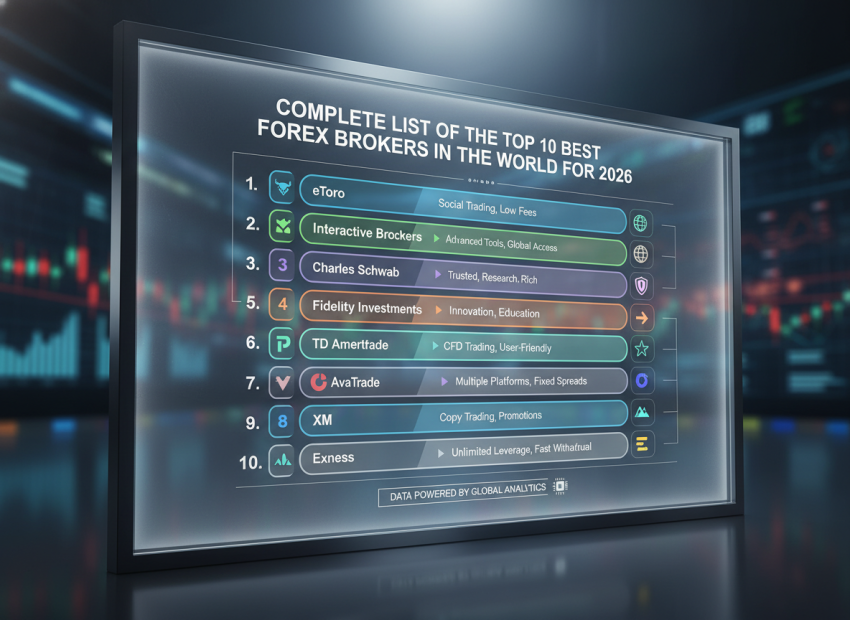
The global foreign exchange trading landscape in 2026 is defined by unprecedented volatility and technological sophistication. For both retail traders and institutional clients, achieving consistent trading success now requires more than just a basic interface; it demands robust trading platforms equipped with advanced charting, real-time data, and seamless execution. As the market evolves, the gap between average and premier online trading platforms has widened, making your choice of partner the most critical strategic decision you will make.
Navigating this environment requires a focus on three core pillars:
-
Regulatory Compliance: Ensuring your capital is protected by top-tier authorities such as the CFTC, NFA, or FCA.
-
Technological Innovation: Accessing next-gen mobile trading apps and industry-standard platforms like MetaTrader 4/5.
-
Cost Efficiency: Minimizing the impact of average spreads and commission structures on your bottom line.
This guide provides a definitive ranking of the top 10 best forex brokers in the world for 2026. We have evaluated dozens of firms across hundreds of data points—from the variety of tradable instruments and currency pairs to the quality of educational resources and client service—to help you secure a reliable partner in the international markets.
Methodology: How We Ranked the World’s Leading Brokers
Having underscored the critical importance of selecting a reliable forex broker in the dynamic 2026 market, our comprehensive ranking of the world’s leading platforms is underpinned by a meticulously developed methodology. This rigorous framework ensures our evaluations are both objective and deeply relevant to the factors that define a superior trading experience. We meticulously analyze various facets, from operational integrity to technological prowess and financial efficiency, to present an unbiased assessment.
Regulatory Compliance and Safety of Funds
Regulatory compliance is the non-negotiable cornerstone of our ranking methodology. In an industry where capital security is paramount, we prioritize brokers governed by "Tier-1" jurisdictions. These include the Commodity Futures Trading Commission (CFTC) and National Futures Association (NFA) in the United States, the Financial Conduct Authority (FCA) in the UK, and the Australian Securities and Investments Commission (ASIC).
Our evaluation process scrutinizes three primary safety pillars:
-
Segregation of Client Funds: Ensuring trader capital is held in top-tier banks, completely separate from the broker’s operational accounts.
-
Negative Balance Protection: Assessing whether retail traders are shielded from losing more than their initial deposit during extreme market volatility.
-
Regulatory Track Record: We analyze the history of legal compliance, transparency in financial reporting, and the presence of investor compensation schemes.
Brokers holding multiple licenses across reputable global jurisdictions receive higher "Trust Scores." We disqualify any firm operating without verifiable oversight or those with a history of unresolved regulatory sanctions, ensuring our top 10 list represents only the most secure environments for your capital.
Trading Costs: Spreads and Commissions
While regulatory safety is the foundation of a reliable broker, the cost of execution directly dictates a trader’s bottom line. In our 2026 methodology, we meticulously analyzed commission structures and average spreads across thousands of data points to determine the true Total Cost of Ownership (TCO) for retail traders and institutional clients alike.
We categorize trading costs into two primary models to ensure a fair comparison:
-
Spread-only (Standard) Accounts: These are often preferred by beginners. The broker’s compensation is entirely integrated into the bid/ask spread, simplifying the calculation of entry and exit costs.
-
Commission-based (Raw/ECN) Accounts: Typically favored by high-volume traders and scalpers, these accounts offer raw market spreads (often starting at 0.0 pips) in exchange for a fixed per-lot commission.
Our ranking process involves live testing of execution speeds alongside cost analysis. We prioritize brokers that offer transparency in their pricing, specifically looking for tight spreads on major currency pairs like EUR/USD, competitive overnight swap rates, and the absence of predatory inactivity or withdrawal fees. This rigorous approach ensures that the brokers on our list provide a cost-effective environment for sustainable trading success.
Platform Performance and Technology
Beyond execution costs, the efficacy of a broker’s trading platform and underlying technology are paramount for a seamless trading experience. Our ranking methodology rigorously assessed platform performance across several key dimensions. We prioritized brokers offering superior execution speed and reliability, crucial for minimizing slippage and ensuring orders are filled precisely when intended. This evaluation extended to the stability and uptime of their servers, guaranteeing uninterrupted access to markets.
We meticulously examined the user interface and experience (UI/UX) of both proprietary and third-party platforms like MetaTrader 4/5. Key considerations included intuitiveness, customization options, and the availability of advanced charting tools, a comprehensive suite of technical indicators, and diverse order types. Furthermore, the quality and functionality of mobile trading applications were critically reviewed, ensuring traders have robust, feature-rich access to their accounts and the markets on the go. Brokers demonstrating innovation in their technological offerings, providing cutting-edge tools and responsive infrastructure, scored higher in our assessment.
In-Depth Reviews of the Top 5 Global Leaders
Building upon our evaluation of platform technology and execution speed, we now transition to a detailed analysis of the industry’s premier institutions. The following global leaders represent the pinnacle of the brokerage landscape in 2026, selected for their ability to harmonize sophisticated trading ecosystems with unwavering regulatory standards. These firms have consistently outperformed their peers across our rigorous testing metrics, proving their worth to both retail and institutional clients.
To qualify as a global leader, these brokers must excel in several critical areas:
-
Regulatory Integrity: Maintaining licenses across multiple top-tier jurisdictions.
-
Market Depth: Providing access to an extensive range of currency pairs and international asset classes.
-
Cost Transparency: Offering competitive commission structures and tight average spreads.
-
Innovation: Delivering proprietary tools that enhance trading success.
IG Group: Best Overall Performance and Research
IG Group consistently secures the top spot in global rankings due to its unparalleled balance of regulatory compliance, competitive pricing, and industry-leading research. As a publicly traded company (LSE: IGG) regulated in multiple tier-1 jurisdictions, including the FCA (UK) and ASIC (Australia), it offers a level of security and transparency that few competitors can match.
Traders gain access to over 17,000 tradable instruments, spanning across major, minor, and exotic currency pairs, as well as indices, shares, and commodities. What truly sets IG apart is its commitment to educational resources and market analysis. Through its DailyFX integration, the broker provides real-time news, technical analysis, and sentiment data that empower both retail traders and institutional clients.
-
Platform Versatility: Offers a flagship web-based platform, advanced charting via ProRealTime, and full support for MetaTrader 4.
-
Pricing: Competitive average spreads (typically 0.6 pips on EUR/USD) with a transparent commission structure for direct market access (DMA) accounts.
-
Mobile Experience: A highly-rated mobile trading app that mirrors the desktop’s sophisticated functionality, featuring seamless order execution and integrated research.
For those seeking a reliable online broker that excels in every category—from execution speed to depth of research—IG Group remains the premier choice for 2026.
Saxo Bank: Premium Experience for Professional Traders
Building on the need for specialized services beyond general market offerings, Saxo Bank stands out as a premier choice for professional traders and high-net-worth individuals. It delivers a truly premium experience, distinguished by its sophisticated multi-asset trading environment. Saxo Bank’s proprietary platforms, SaxoTraderGO and SaxoTraderPRO, are engineered for advanced functionality, offering deep liquidity, superior execution, and comprehensive analytical tools across a vast array of instruments including forex, stocks, bonds, options, and futures.
This broker excels in providing access to over 40,000 tradable instruments across global markets, making it an ideal hub for diversified portfolios. Its commitment to robust regulatory compliance across multiple jurisdictions ensures a secure and transparent trading ecosystem, instilling confidence in its discerning clientele. While its minimum deposit requirements and fee structures are tailored for serious traders, the unparalleled access to institutional-grade research, advanced charting capabilities, and dedicated client support justifies its position as a top-tier provider for those seeking a sophisticated and comprehensive trading solution. Saxo Bank’s emphasis on cutting-edge technology and a broad product offering solidifies its reputation as a leader for those demanding more than just basic forex access.
Interactive Brokers: Superior Execution for Institutional Clients
Interactive Brokers (IBKR) stands as the premier choice for institutional clients and high-volume professional traders who demand uncompromising execution and deep liquidity. While Saxo Bank provides a luxury multi-asset environment, IBKR focuses on a high-performance ecosystem designed for complex, data-driven strategies and algorithmic trading.
The broker’s primary strength lies in its direct market access (DMA) model, which sources liquidity from 17 of the world’s largest forex-dealing banks. This results in industry-leading spreads—averaging as low as 0.226 pips for EUR/USD—and a transparent, volume-based commission structure that significantly reduces costs for active participants.
Key Institutional Advantages:
-
Trader Workstation (TWS): A flagship platform offering advanced risk management, sophisticated charting, and over 100 order types.
-
Universal Account: The ability to trade forex alongside stocks, options, futures, and bonds globally from a single integrated account.
-
Regulatory Rigor: As a publicly traded entity (NASDAQ: IBKR), it maintains massive capital reserves and is overseen by top-tier regulators including the CFTC, NFA, and FCA.
While the learning curve for TWS is steep for retail beginners, the platform’s depth is a necessity for those requiring institutional-grade tools and the lowest possible trading friction in 2026.
Specialized Leaders and Regional Top Picks
While the previous section highlighted global leaders excelling in overall performance and institutional-grade services, the forex market also features brokers that stand out for their specialized offerings or strong regional focus. These platforms cater to distinct trader profiles, whether it’s navigating specific regulatory environments or providing cutting-edge tools for particular trading styles. This section delves into brokers that have carved out niches, offering tailored experiences that might be a perfect fit for your individual trading strategy and location.
FOREX.com: The Best Choice for US Traders
For retail traders based in the United States, FOREX.com stands as the premier destination, balancing strict regulatory compliance with a sophisticated trading ecosystem. Owned by StoneX Group Inc., a publicly traded company, it provides a level of financial transparency and security that is paramount for American investors navigating the complexities of the foreign exchange trading market.
As a member of the NFA and registered with the CFTC, FOREX.com adheres to the rigorous standards required for US operations, including the 50:1 leverage cap on major currency pairs and the FIFO (First-In-First-Out) execution rule. This regulatory alignment ensures a safe environment for trading success.
Key Advantages for US Traders:
-
Extensive Asset Selection: Access to over 80 currency pairs, significantly higher than many domestic competitors.
-
Versatile Platforms: Traders can choose between the robust proprietary platform, MetaTrader 4 (MT4), and MetaTrader 5 (MT5), all featuring advanced charting and technical analysis tools.
-
Competitive Pricing: The broker offers multiple account types, including a commission-based model for high-volume retail traders seeking tighter average spreads.
-
Educational Excellence: A wealth of educational resources and market insights tailored for both beginners and institutional clients.
While US regulations limit certain features like hedging, FOREX.com optimizes the trading experience through its high-performance mobile trading app and seamless execution, making it the benchmark for domestic reliability.
OANDA: Innovative Tools and Low Minimum Deposits
Following FOREX.com’s strong standing for US traders, OANDA emerges as another highly reputable broker, particularly recognized for its innovative trading tools and highly accessible low minimum deposit policy, often set at $0. This makes OANDA an attractive option for both new traders looking to start with minimal capital and experienced traders seeking advanced functionalities.
OANDA maintains robust regulatory compliance, operating under the strict oversight of the CFTC and NFA in the United States, alongside other major global jurisdictions. This commitment to regulation ensures a secure and transparent trading environment for its clients. The broker offers a sophisticated trading ecosystem, featuring its proprietary fxTrade platform, which is lauded for its advanced charting capabilities and analytical tools. Additionally, OANDA supports the widely popular MetaTrader 4 (MT4) platform, catering to traders who prefer its familiar interface and extensive customization options.
While its standard EUR/USD spread of 1.68 might be slightly higher than some competitors, OANDA compensates with its powerful research resources, comprehensive market analysis, and a suite of APIs for algorithmic trading. These features, combined with its commitment to client education and a user-friendly experience, position OANDA as a strong contender for traders prioritizing technological innovation and flexibility.
tastyfx: Industry-Leading Mobile Trading Experience
Following OANDA’s innovative tools and accessible entry points, tastyfx distinguishes itself with an industry-leading mobile trading experience, making it a top contender for traders prioritizing on-the-go functionality. Recognized as the premier mobile trading app among U.S.-regulated brokers, tastyfx’s proprietary platform, inherited from its parent company IG, offers a suite of powerful features.
Traders benefit from sophisticated design innovations, seamlessly integrated research, and an intuitive order entry dialogue that streamlines trade management. A significant highlight is its advanced charting capabilities, which are unparalleled on a mobile device, providing comprehensive technical analysis tools at your fingertips. Furthermore, tastyfx incorporates trading signals, catering to U.S. traders interested in social copy trading opportunities.
For those preferring established solutions, tastyfx also supports the popular MetaTrader 4 (MT4) app. This robust mobile offering, combined with tastyfx’s strong regulatory backing by the CFTC and NFA, and its connection to a publicly traded parent company, positions it as an excellent choice for traders seeking superior mobile functionality and a secure trading environment.
Evaluating Platforms and Trading Ecosystems
While mobile-first solutions like tastyfx have revolutionized on-the-go access, the broader trading ecosystem in 2026 is defined by a sophisticated interplay between industry-standard software and bespoke technological innovations. Selecting a broker is no longer just about the spreads; it is about the technological infrastructure that supports your execution strategy. Whether you are an algorithmic trader or a manual scalper, the platform serves as your primary gateway to the international markets.
This section evaluates the current state of trading technology, moving beyond simple order entry to explore the full suite of tools available to modern investors. We will analyze the ongoing dominance of the MetaTrader suite, the emergence of next-gen proprietary apps, and the increasing importance of social and copy trading features in the current market landscape. Choosing the right environment requires balancing stability, customization, and connectivity to ensure your tools can keep pace with volatile currency pairs.
The Battle of MetaTrader 4 vs MetaTrader 5
Despite the rise of sophisticated proprietary software, the MetaTrader suite remains the backbone of the retail forex industry. In 2026, the choice between MetaTrader 4 (MT4) and MetaTrader 5 (MT5) is less about which is "better" and more about which ecosystem aligns with your technical requirements and asset preferences.
MetaTrader 4: The Legacy Powerhouse MT4 remains the most popular platform globally, primarily due to its massive library of custom indicators and Expert Advisors (EAs) built on the MQL4 language. It is purpose-built for forex, offering a streamlined, stable environment that many veteran traders refuse to abandon. Its lower hardware requirements and vast community support make it the gold standard for retail currency trading.
MetaTrader 5: The Multi-Asset Successor MT5 was engineered to handle more than just forex. It is a 64-bit, multi-threaded platform that supports stocks, futures, and commodities natively. Key technical advantages include:
-
Expanded Timeframes: 21 timeframes compared to MT4’s 9.
-
Advanced Order Management: Six types of pending orders and an integrated Depth of Market (DOM) display.
-
Superior Backtesting: A multi-threaded strategy tester that allows for significantly faster optimization of automated strategies.
-
MQL5 Efficiency: A more modern programming language that is closer to C++, offering faster execution for high-frequency traders.
While MT4’s dominance is slowly eroding as brokers push for modern infrastructure, it remains the king of forex-only automation. However, for the modern trader seeking a multi-asset portfolio and superior execution technology, MT5 is the definitive choice for 2026.
Proprietary Apps and Next-Gen Trading Tools
While MetaTrader remains a reliable industry staple, the world’s leading brokers are increasingly differentiating themselves through proprietary ecosystems. These platforms are engineered to bridge the gap between professional-grade functionality and retail accessibility, offering a more cohesive user experience than the often-fragmented MT4 interface.
Key Advantages of Proprietary Platforms:
-
Seamless Integration: Unlike third-party plugins, tools such as sentiment analysis, real-time economic calendars, and live news feeds are natively integrated into the workspace for faster decision-making.
-
Advanced Charting: Brokers like IG (tastyfx) and Saxo Bank provide sophisticated charting packages that often surpass MT5 in terms of technical indicators, drawing tools, and historical data depth.
-
Next-Gen Analytics: We are seeing a surge in AI-driven tools. For instance, OANDA’s technical analysis labs and Interactive Brokers’ IBKR Desktop use machine learning to identify patterns and market sentiment in real-time.
For the modern trader, these next-gen tools are no longer optional. Features such as one-tap trading, biometric security, and cross-device synchronization ensure that institutional-level execution is available on any device. As we move through 2026, the focus has shifted from simple order entry to comprehensive decision-support systems that help traders filter market noise and manage risk with surgical precision.
Social and Copy Trading Integration in 2026
Building on the sophisticated analytics and AI-driven tools now integrated into proprietary platforms, the landscape of social and copy trading has evolved significantly in 2026. These features are no longer niche offerings but essential components for many traders seeking to leverage collective intelligence and streamline their strategies. Social trading platforms allow users to interact, share insights, and observe the trades of experienced peers, fostering a community-driven approach to market analysis.
Copy trading takes this a step further, enabling traders to automatically replicate the positions of successful investors in real-time. This democratizes access to complex strategies, making it particularly appealing for:
-
Beginners: Who can learn by observing and mirroring seasoned traders.
-
Time-constrained individuals: Who can participate in the market without constant monitoring.
-
Diversification seekers: Who can spread risk across multiple strategies and traders.
Leading brokers are increasingly integrating these functionalities directly into their platforms or offering seamless access to popular third-party networks like ZuluTrade. For instance, some platforms, including tastyfx, provide trading signals that can be a precursor to full copy trading, allowing users to act on expert analysis. This integration ensures that traders can move from advanced charting and AI-powered insights to executing trades based on community-vetted strategies, all within a cohesive trading ecosystem.
Strategic Guide: Selecting the Right Broker for Your Needs
Having explored the advanced features and innovative tools offered by leading brokers, including the growing integration of social and copy trading, the next critical step is to strategically align these offerings with your personal trading objectives. Selecting the right forex broker is not merely about finding a platform with the most features, but about identifying a partner that truly supports your individual trading style, risk appetite, and long-term financial goals. This section will guide you through the essential considerations to make an informed decision, ensuring your chosen broker provides the optimal environment for your trading journey.
Beginner vs Professional Account Features
After establishing your trading goals and risk tolerance, the next crucial step is to understand how broker account features align with your experience level. Forex brokers typically offer distinct account types tailored for either beginner or professional traders, each with a unique set of functionalities.
For beginners, accounts often prioritize simplicity, education, and risk mitigation. Key features commonly include:
-
Lower Minimum Deposits: Making forex trading accessible with smaller capital.
-
Micro-Lot Trading: Allowing trades with smaller position sizes to manage risk effectively.
-
Extensive Educational Resources: Webinars, tutorials, and guides to build foundational knowledge.
-
Demo Accounts: Risk-free environments to practice strategies and familiarize oneself with the platform.
-
Simplified Platforms: User-friendly interfaces that reduce complexity.
Conversely, professional or institutional accounts are designed for experienced traders requiring advanced tools and greater flexibility:
-
Raw Spreads and Lower Commissions: Access to tighter pricing, often with commission per trade.
-
Higher Leverage Options: Subject to regulatory limits, offering increased market exposure.
-
Advanced Trading Platforms: Access to sophisticated charting, analytical tools, and algorithmic trading capabilities (e.g., API access).
-
Dedicated Account Managers: Personalized support and insights.
-
Institutional Liquidity: Potentially better execution and deeper market access.
Choosing between these account types is paramount. A beginner might be overwhelmed by a professional account’s complexity and higher capital requirements, while a professional trader would find a basic account restrictive. Always evaluate your current skill set, capital, and trading frequency to select an account that truly supports your trading journey and risk management strategy.
Understanding Global Regulatory Jurisdictions
Selecting an account type is only half the battle; ensuring that account is housed within a reputable jurisdiction is paramount for capital security. The global forex landscape is categorized into "Tiers" based on the stringency of oversight and the level of protection offered to retail traders. Understanding these distinctions is critical for managing counterparty risk.
Tier-1 Jurisdictions: The Gold Standard Brokers regulated in Tier-1 regions are subject to the most rigorous audits, transparency requirements, and capital adequacy rules.
-
United States: Regulated by the CFTC and NFA. These bodies enforce strict rules, including a 50:1 leverage cap on major pairs, the FIFO (First-In-First-Out) execution rule, and a total prohibition on hedging within the same account.
-
United Kingdom: Regulated by the FCA. It offers some of the world’s strongest consumer protections, including the Financial Services Compensation Scheme (FSCS), which may protect client funds up to £85,000 if a broker becomes insolvent.
-
Australia: Regulated by ASIC. Known for high standards, ASIC has recently aligned its retail leverage caps with European standards to mitigate trader volatility.
Tier-2 and Offshore Jurisdictions While regions like Cyprus (CySEC) provide a legal gateway to the EU via MiFID II, Tier-3 or "offshore" jurisdictions (such as Belize, Seychelles, or Vanuatu) often attract traders with higher leverage and fewer onboarding restrictions. However, these jurisdictions offer significantly lower levels of investor protection and limited legal recourse in the event of a dispute. Always verify a broker’s license number directly on the regulator’s official registry to ensure the entity is authorized to provide financial services in your region.
Risk Management and Disclosure Essentials
Effective risk management is the cornerstone of long-term trading success. While the regulatory frameworks discussed previously provide a safety net, the ultimate responsibility for capital preservation lies with the trader. A reputable broker must provide the tools and disclosures necessary to navigate market volatility and protect your investment.
Essential Risk Management Features to Prioritize
-
Negative Balance Protection: Crucial for retail traders, this feature ensures you cannot lose more than your initial deposit, even during extreme market gaps or black swan events.
-
Guaranteed Stop-Loss Orders (GSLOs): Some premier brokers offer GSLOs for a small premium. Unlike standard stop-losses, these are immune to slippage, ensuring your exit price is honored regardless of market liquidity.
-
Margin and Leverage Controls: Top-tier platforms allow you to adjust leverage levels manually. Understanding that leverage is a double-edged sword is vital; while it amplifies gains, it equally accelerates losses across various asset classes.
-
Real-Time Risk Calculators: Leading brokers integrate risk-reward calculators directly into their order tickets, allowing you to see the potential impact on your account equity before executing a trade.
Understanding Mandatory Disclosures
Regulated brokers are legally required to publish a Risk Disclaimer, often highlighting the percentage of retail investor accounts that lose money when trading CFDs or forex. In 2026, this figure typically ranges between 70% and 80%. Furthermore, always review a broker’s Order Execution Policy. This document discloses how the firm handles slippage, re-quotes, and whether they act as a market maker or utilize an ECN/STP model. Transparency in these disclosures is a primary indicator of a broker’s integrity and reliability.
Conclusion: Securing Your Financial Future with the Right Partner
Having thoroughly explored the critical facets of forex broker selection, from stringent regulatory compliance and robust platform performance to transparent trading costs and essential risk management tools, you are now equipped to make an informed decision. The journey through our top 10 global leaders and specialized picks underscores a fundamental truth: the ‘best’ broker is ultimately the one that aligns perfectly with your individual trading objectives, experience level, and risk tolerance. Consider these final strategic steps:
-
Revisit your priorities: Are you a beginner seeking extensive educational resources, or a professional demanding superior execution and advanced charting?
-
Verify regulatory standing: Always prioritize brokers regulated by reputable authorities like the CFTC, NFA, FCA, or ASIC to safeguard your funds.
-
Test platforms: Utilize demo accounts to assess platform usability, tool availability, and overall trading ecosystem before committing capital.
-
Understand fee structures: Be clear on spreads, commissions, and any hidden costs that could impact your profitability.
By diligently applying the insights from this comprehensive guide, you can confidently select a partner that not only meets your immediate needs but also supports your long-term financial aspirations in the dynamic forex market. Securing your financial future begins with this crucial choice.